
How to Choose an LED Screen Without Buying the Wrong One
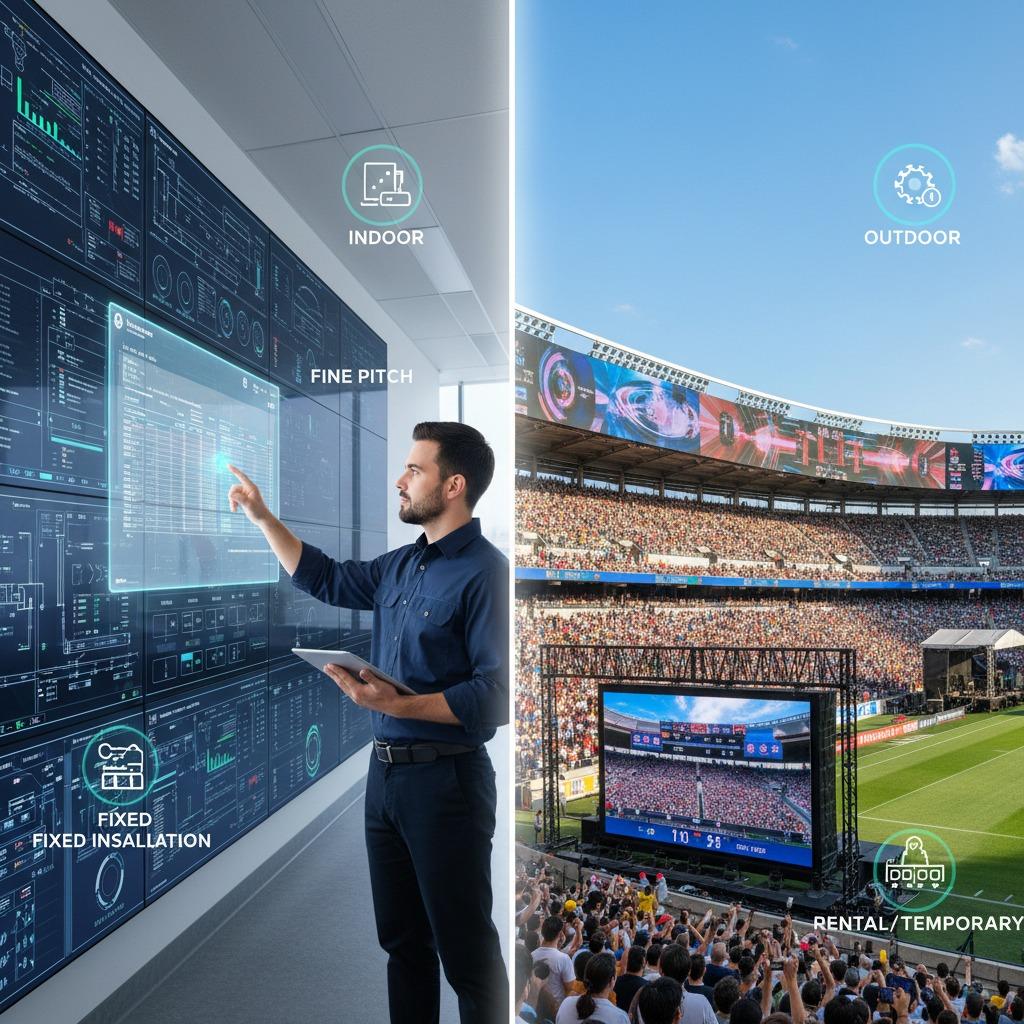
Choosing an LED screen is less about chasing the brightest spec sheet and more about matching the display to the job. That sounds obvious until you are standing in front of a wall of options: indoor or outdoor, fine pitch or standard pitch, rental or fixed installation, front service or rear service. A practical How to Choose an LED Screen decision usually comes down to viewing distance, ambient light, installation conditions, and how the screen will be used day after day.
If you are responsible for sourcing, engineering, or a product rollout, the wrong display choice can show up in ugly ways. Text becomes hard to read, colors look washed out under daylight, maintenance becomes a headache, and the total cost creeps higher than planned. A good LED screen buying guide should help you avoid those traps and make a decision that holds up in the field, not just in a showroom.
Start with the application, not the panel spec
The first question is not “What is the highest resolution?” It is “What will this screen be asked to do?” A retail video wall has different demands from a stadium ribbon board. A control room display faces different pressures from a stage backdrop that is assembled and dismantled repeatedly. Even within the same building, the right choice can shift depending on whether the audience stands three feet away or thirty.
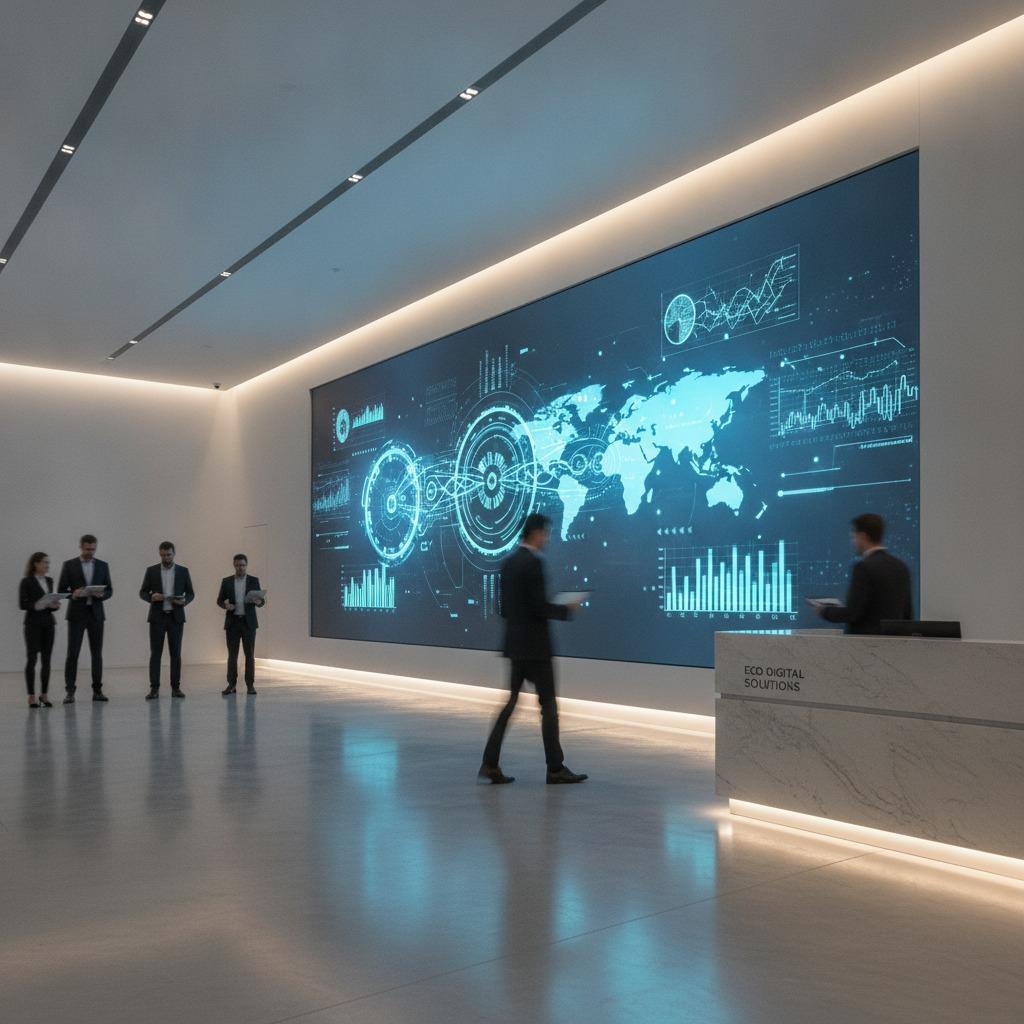
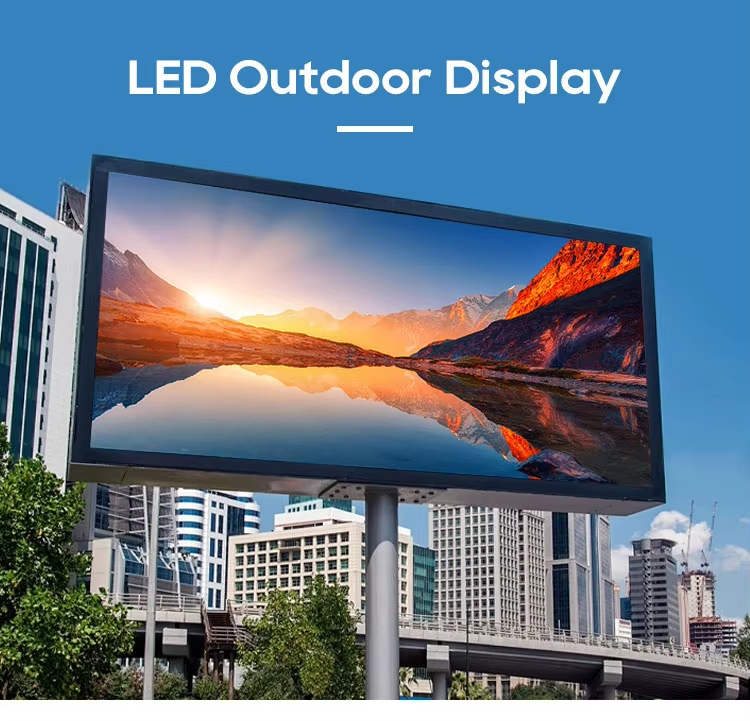
For indoor use, fine pitch LED screens are often preferred because they can present sharper text and smoother images at closer distances. Outdoor installations usually need higher brightness, stronger weather protection, and a design that can withstand dust, wind, and changing temperatures. If the screen will travel, as in rental and staging work, weight, locking hardware, and quick assembly matter almost as much as picture quality.
The main selection criteria that actually matter
Pixel pitch and viewing distance
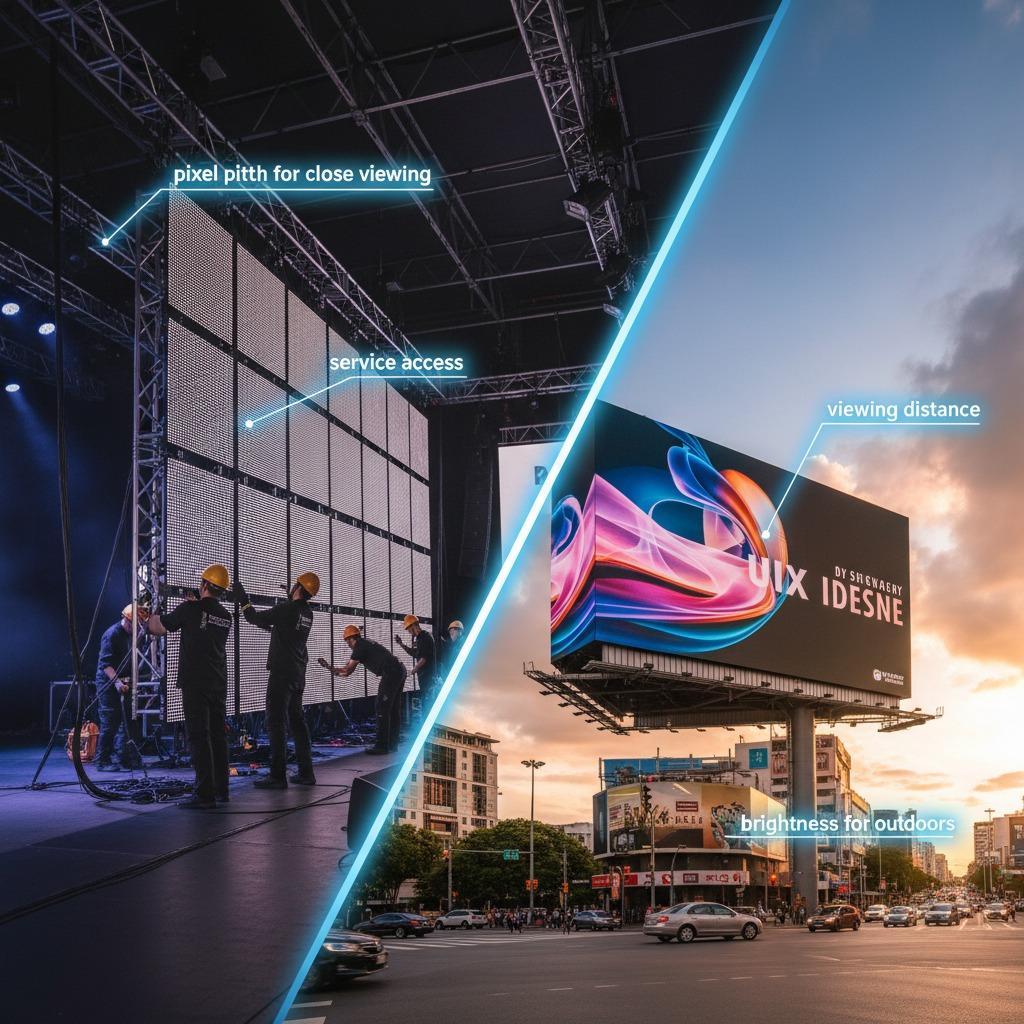
Pixel pitch is one of the easiest terms to obsess over and one of the easiest to misuse. Smaller pitch generally supports closer viewing, but it also raises cost and can create unnecessary complexity if the audience will never stand that close. A sensible best LED screen selection starts by estimating the typical viewing distance and matching pitch to that reality.
Brightness and ambient light
An LED screen that looks excellent in a dim conference room may struggle in a sunlit atrium. Brightness needs to be judged against the lighting conditions, not in isolation. Too little brightness makes content fade; too much can be uncomfortable indoors and can waste energy. That balance matters more than some buyers expect, especially in mixed-light environments.
Installation environment
Wall-mounted, floor-supported, curved, suspended, or mobile? The mounting method affects cabinet design, service access, structural loading, and cable routing. Buyers sometimes focus on the display surface and forget the frame behind it. That is a mistake. A robust structure and straightforward maintenance access can save far more time over the life of the system than a slightly cheaper panel ever will.
Content type
Video-heavy content can tolerate different tradeoffs than dashboards, live data, or fine graphics. If your screen will show spreadsheets, production metrics, or product imagery with small text, the display must support clean edges and consistent color performance. If it is mainly for large-format motion graphics, other factors may carry more weight.
Indoor, outdoor, fixed, or rental: choose the right family first
One of the most useful shortcuts in an LED screen buying guide is to sort products by use case before comparing technical details. Fixed installation systems usually prioritize stability, serviceability, and long-term visual consistency. Rental screens are built for speed, repeated handling, and reliable assembly. Outdoor systems need different enclosure behavior than indoor ones, and that distinction should be treated as non-negotiable rather than optional.
A common sourcing mistake is selecting a screen that is technically impressive but awkward for the real operating environment. For example, a fine-pitch indoor screen may be overkill in a large hall where viewers are farther away. Likewise, a rugged outdoor unit may be unnecessary expense for a controlled interior space. The best LED screen selection is often the one that looks restrained on paper and performs cleanly in service.
Pay attention to maintenance, not just performance
Buying an LED screen is a capital decision, but operating it is the real test. Ask how modules are serviced, whether front access is available, and how quickly failed components can be replaced. If the screen is installed in a tight space, rear access may be impractical. That simple detail can affect downtime, labor cost, and even whether routine service is realistic.
Also think about spare parts and consistency over time. LED systems are often part of a larger visual environment, and small differences in color or brightness can become obvious. It is worth discussing how the supplier handles calibration, module replacement, and long-term support. Buyers sometimes skip this conversation until a problem appears, which is usually the expensive way to learn.
Common mistakes buyers make
One frequent error is overspecifying resolution while underestimating installation complexity. Another is ignoring content management needs, especially when the screen will be part of a live operation. Some teams focus entirely on upfront price and discover later that service access, structure, or power requirements add hidden cost. These are not rare edge cases; they are common procurement stories.
There is also the issue of future use. If the screen may be expanded, relocated, or integrated with other systems later, the original design should leave room for that. A little flexibility at the start can prevent a very rigid and expensive problem later.
A practical way to shortlist options
When comparing products, reduce the field to a few practical questions: How far away will people stand? Is the environment indoor or outdoor? Will the screen stay in place or move frequently? What kind of content will appear most often? How will the unit be serviced after installation?
If a supplier can answer those questions clearly, you are already moving in the right direction. If the answers stay vague, be cautious. Vague answers around brightness, viewing conditions, or maintenance usually mean the fit has not been thought through carefully enough.
Buyer takeaway
The right LED screen is the one that fits the space, the content, and the maintenance plan. That is the real decision behind How to Choose an LED Screen. Treat the display as part of a working system, not a standalone panel, and you will make a cleaner buying choice with fewer surprises after installation.
If you are preparing a purchase or comparing suppliers, build your shortlist around application, viewing distance, environment, and service access before anything else. That approach is usually the fastest route to a screen that does its job quietly, which is what good industrial and commercial equipment should do.
FAQ
What matters most when choosing an LED screen?
Application fit. Pixel pitch, brightness, and installation details matter, but only after you define how and where the screen will be used.
Is a smaller pixel pitch always better?
No. Smaller pitch helps at close viewing distances, but it can add cost and complexity if the audience is farther away.
Should I choose indoor or outdoor LED screens based on location alone?
Location is the starting point, but ambient light, weather exposure, and service access also need to be considered.
What is the safest next step before buying?
Document the use case in plain terms: viewing distance, content type, mounting method, and maintenance access. Then compare products against that list instead of against marketing claims.