
Outdoor advertising screen selection starts with the environment, not the pixel pitch
Outdoor advertising screen selection is often treated like a simple brightness contest, but that is usually the wrong place to start. A screen that looks impressive on a spec sheet can still fail a site if it cannot handle direct sun, rain, road dust, salt air, or the viewing distance on that specific street. For engineers, sourcing managers, and brand teams, the real decision is less about buying the brightest panel and more about matching the display to the physical conditions, message length, and operating schedule of the location.
That matters because an outdoor screen is not just signage. It is a public-facing asset that has to stay legible, survive the weather, and support day-to-day maintenance without turning into an expensive nuisance. If the screen is too small, too dim, or too fragile, the campaign underperforms. If it is over-specified, the budget gets buried in features the site never uses. Good selection is a balance.

What buyers are really trying to decide
Most teams asking how to choose outdoor advertising screens are deciding between several tradeoffs at once: visibility versus power use, upfront cost versus maintenance risk, and image detail versus viewing distance. A screen mounted above a roadway has different priorities from one on a shopping center facade. A beachside site has different corrosion concerns from a sheltered urban wall. The screen should fit the environment first, then the message format.
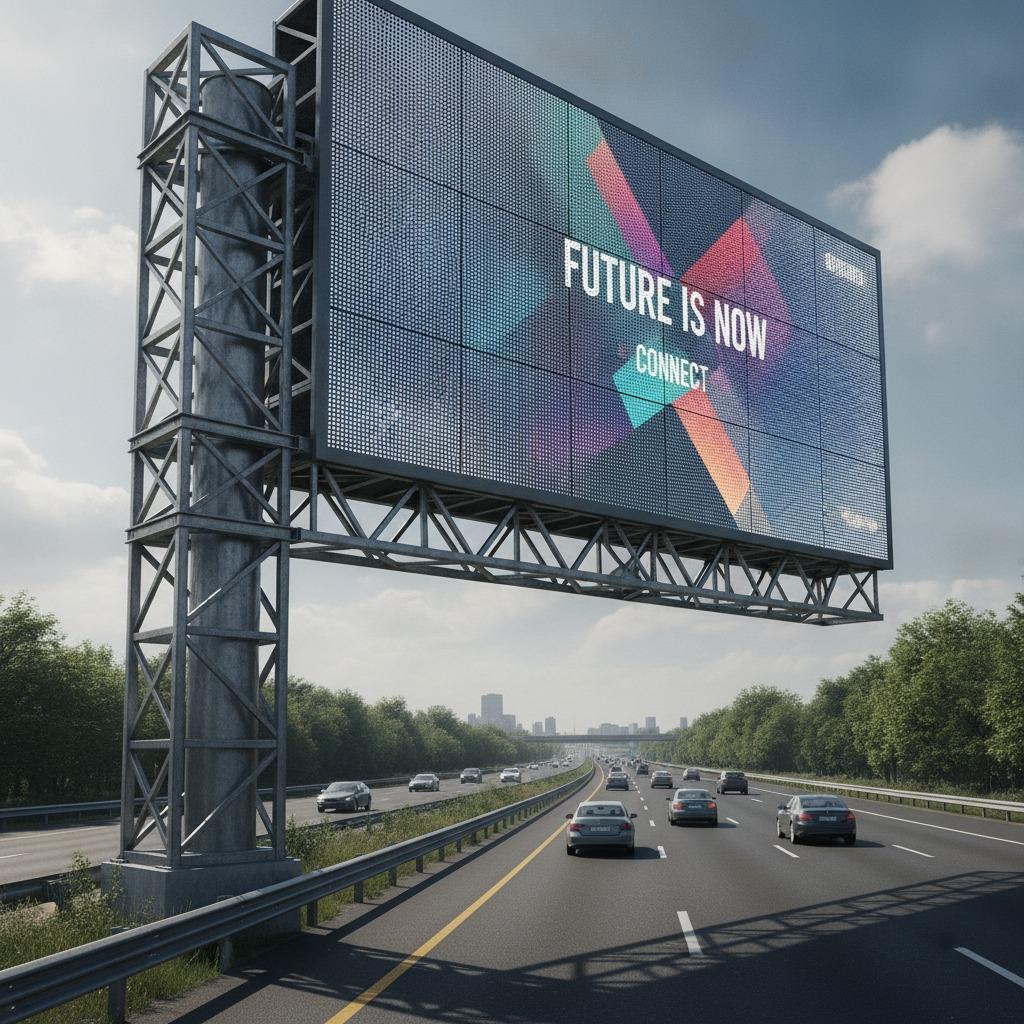
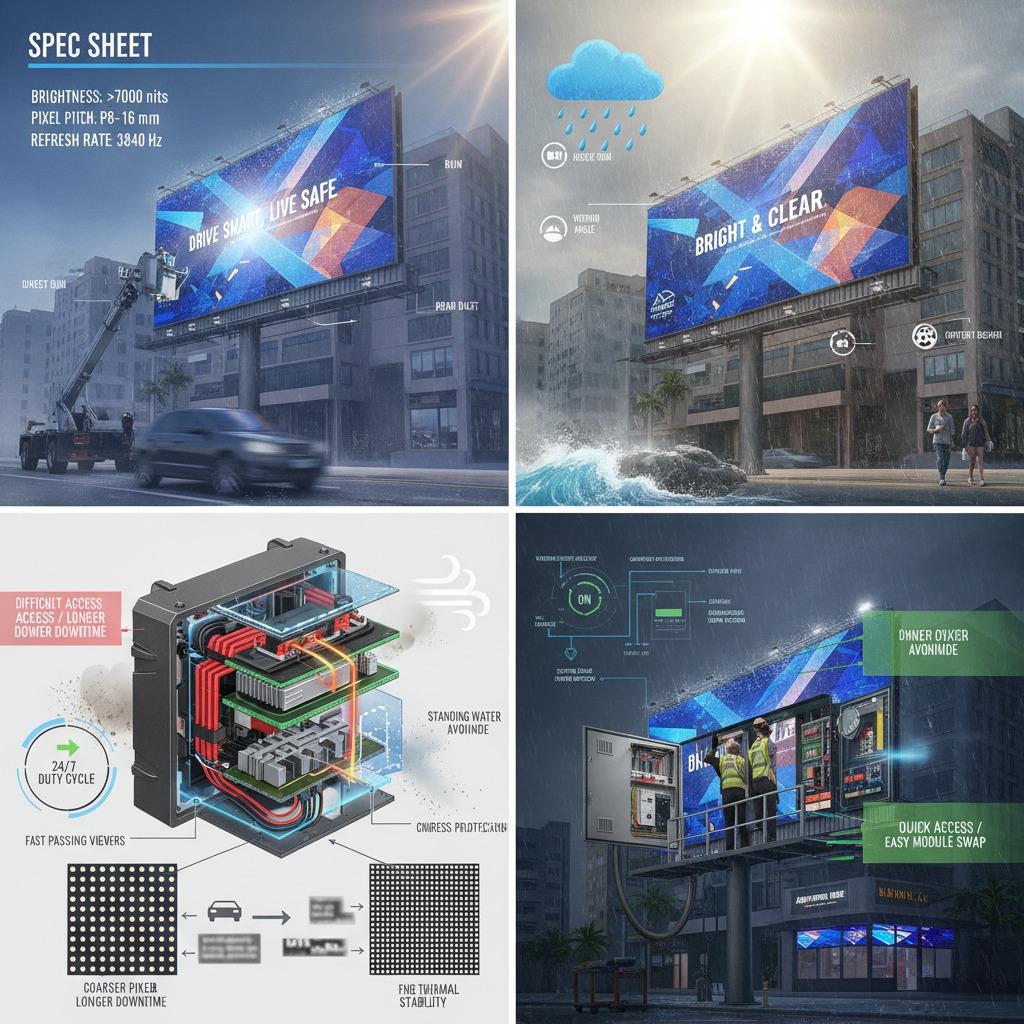
If you are choosing LED billboard hardware for a long-term installation, think in terms of duty cycle and service access. A billboard that runs all day needs stable thermal performance and straightforward module replacement. A screen placed where bucket-truck access is limited may need a cabinet design that reduces downtime during service. These practical details are often more important than a narrow bump in resolution.
Key factors to compare before you buy
1. Viewing distance and pixel pitch
The closer people are to the display, the finer the pixel pitch should be. For road-facing advertising, viewers often pass at speed, so the message must read quickly rather than deliver cinema-like detail. For pedestrian zones, bus shelters, or retail frontage, finer detail can matter more. The right choice depends on how near the audience gets and how much text or imagery the creative will carry.
2. Brightness and daytime legibility
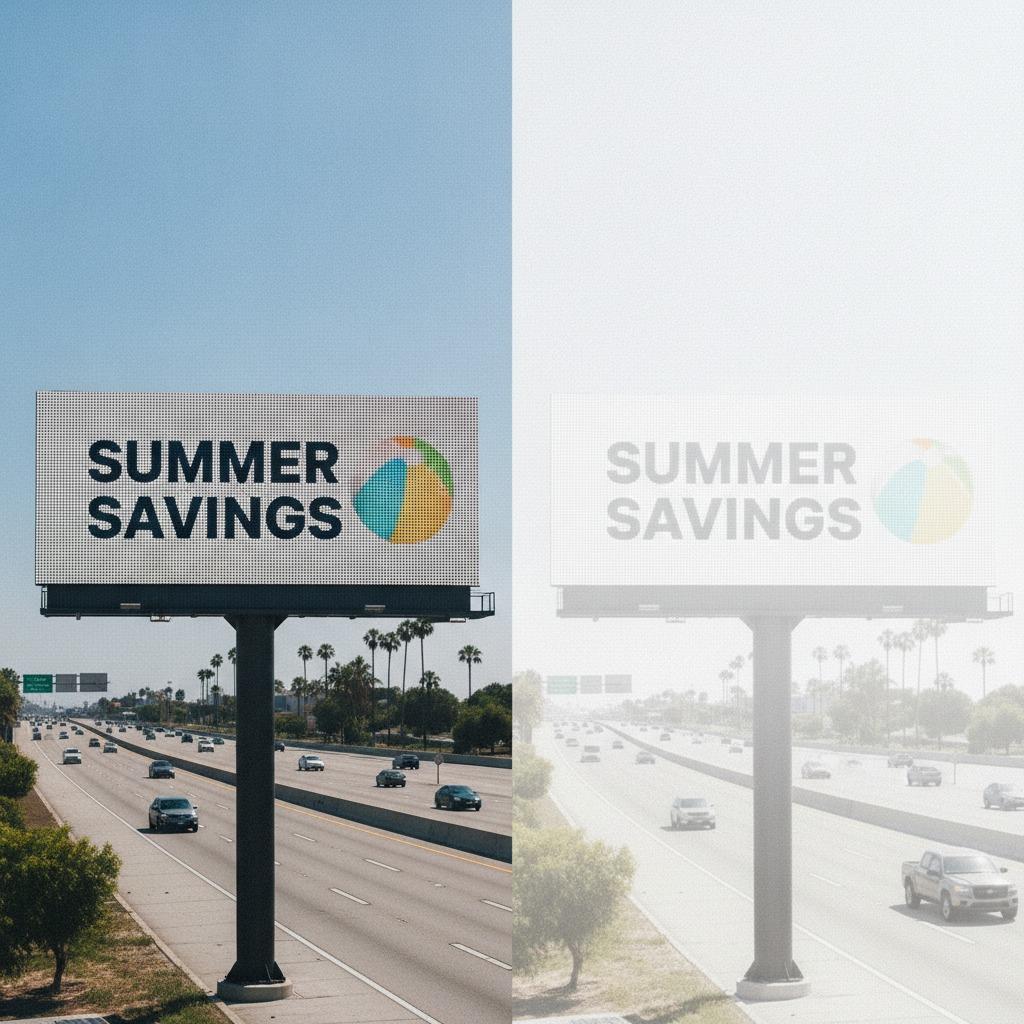
An LED display screen for outdoor advertising has to compete with sunlight, reflective glass, and changing sky conditions. Brightness is important, but raw output alone does not guarantee readability. Content design, contrast, and installation angle all affect performance. In practice, a screen that is slightly less bright but better positioned can outperform a brighter unit installed at the wrong tilt.
3. Weather resistance and enclosure design
A true weatherproof outdoor display should be judged as a system, not just a cabinet label. Look at how the enclosure sheds water, how connectors are protected, and whether the cooling approach suits the local climate. Heat is a silent issue in many markets. Dust and humidity can be equally punishing. If the site is exposed, ask how the screen handles standing water, wind loading, and repeated temperature swings. The answer should be specific, not vague.
4. Maintenance access
Rear service, front service, module replacement, and power supply access all affect uptime. Some buyers focus so heavily on image quality that they forget the cost of reaching a failed component. That is a common mistake. A screen that is easy to repair tends to stay online longer, and downtime is what advertisers remember.
Common mistakes in outdoor screen procurement
One frequent error is buying for the strongest possible specification rather than the actual use case. Another is ignoring local weather patterns. A screen that works well in a dry inland market may need a different sealing and cooling strategy in coastal or tropical conditions. Teams also underestimate content planning. If the screen will mostly run short promotional loops, ultra-fine resolution may not add much value. If it will show dense event schedules or brand visuals with small type, then resolution becomes more important.
There is also the issue of power and control. Outdoor displays often operate for long hours, so energy efficiency and reliable control software deserve attention early, not after installation. A field failure is expensive. A poor content workflow is even worse because it slows the campaign every week.
A practical buyer’s short list
When comparing options, ask four plain questions. Can people read it at the required distance? Will it survive the site conditions without constant intervention? Can technicians service it without unusual access equipment? And does the screen format actually suit the advertising content you plan to run? If a vendor cannot answer those questions clearly, the product may be good in theory but awkward in the real world.
For teams working across multiple sites, consistency also matters. Standardizing on one cabinet family or control platform can simplify spares, training, and deployment. It is not always the cheapest route on paper, but it often reduces friction later. That is the kind of cost that procurement teams notice only after the first round of installations.
FAQ: quick answers for buyers
Is a brighter screen always better outdoors?
No. Brightness helps, but viewing angle, contrast, site orientation, and content design all matter. Over-bright screens can also be wasteful if the location does not need them.
Do all outdoor screens need the same protection level?
No. Urban, coastal, desert, and high-rainfall locations create different risks. The enclosure and thermal design should reflect the site, not a generic assumption.
What should sourcing teams request from suppliers?
At minimum, request clear information on brightness, service method, environmental suitability, power requirements, and installation constraints. If the vendor cannot explain maintenance access, that is worth a second look.
Next step for teams evaluating outdoor signage
The best outdoor advertising screen selection process is site-led and maintenance-aware. Start with the environment, define the viewing conditions, then compare the display features that actually support the campaign. That approach saves time, reduces mistakes, and makes it easier to choose a screen that performs after the first month, not just on installation day. If you are gathering bids, build your shortlist around real operating conditions and ask suppliers to prove fit for the site rather than just quoting headline specifications.