

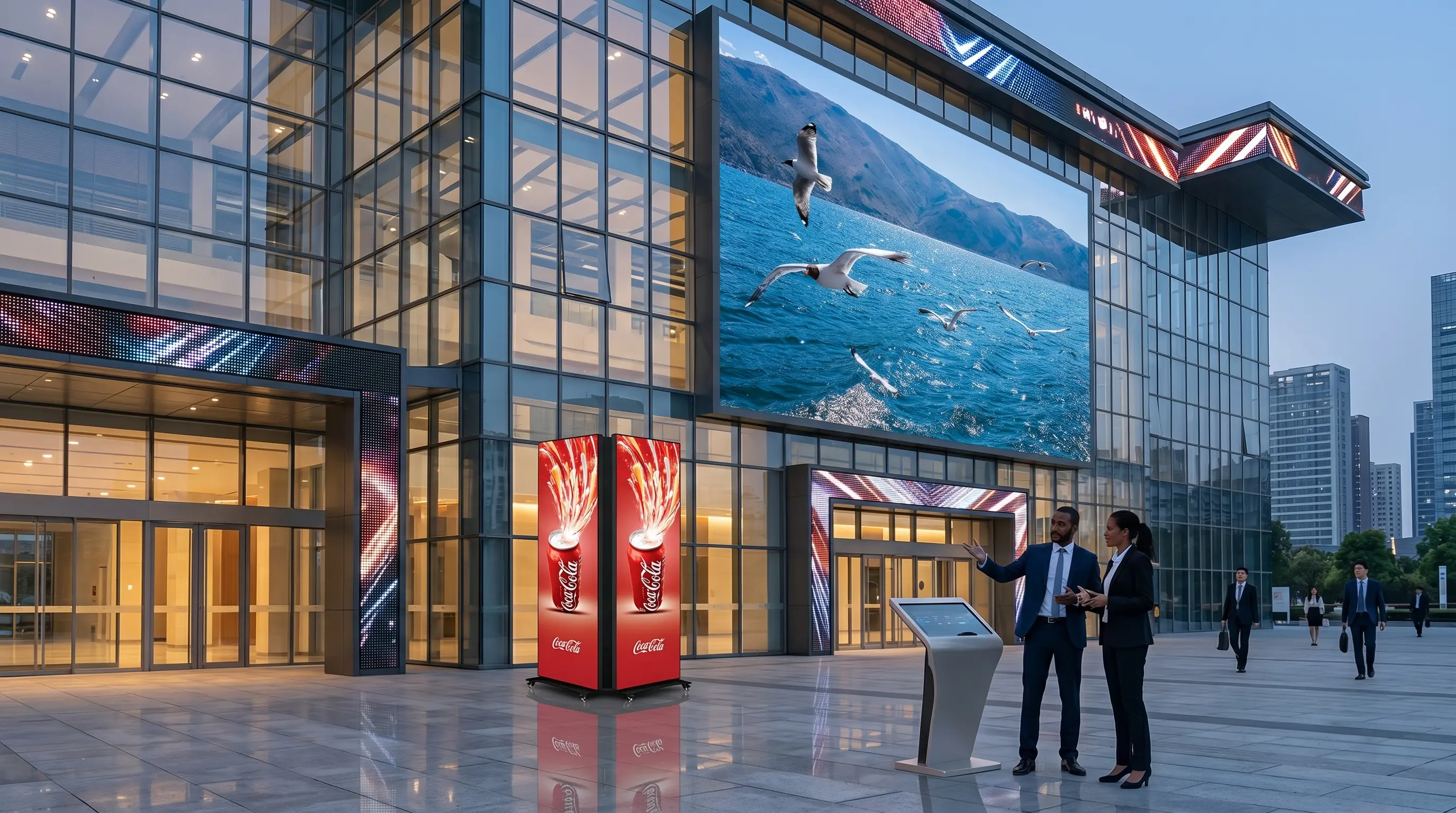
At a glance
1. What Is LED Display Module?
LED display module demand keeps rising across indoor and outdoor signage, branding walls and broadcast-style canvases. If you need advertising reach or premium LED screen modules for repeatable installs, modular tiles remain one of the wisest mechanical foundations—especially when paired with factory-backed calibration data.
This guide walks through definitions, sizing, pixel pitch, structure, cabling, installation modes and dominant packaging technologies so procurement teams can specify LED display modules with confidence—whether you source Tentech cabinets or integrate OEM batches into custom frames.
An LED display module is a circuit assembly that integrates LED lamp beads plus supporting electronics required for pixels to reproduce images and video. Modules ship in multiple footprints so integrators can populate cabinets with mixed grids while preserving mechanical alignment.
1.1 Common Sizes of LED Screen Module
Screen module dimensions vary by diode layout and cabinet standards; commonly quoted sizes include 320×160 mm, 250×250 mm, 192×192 mm, 320×320 mm and neighboring derivatives.
Customers combine sizes and pitches to realise bespoke aspect ratios—matching truss openings, retail fascia grids or OB-truck ingress envelopes—without sacrificing signal routing symmetry across receiving cards.
1.2 Pixel Pitch of Indoor & Outdoor LED Display Module
Pixel pitch describes centre-to-centre spacing between neighbouring LED clusters, measured in millimetres. Pitch correlates inversely with pixel density—lower pitch yields tighter diode packing and typically higher visual resolution at a fixed physical area.
Indoor LED display modules prioritise refined pitches because viewers stand closer—examples include P1.25, P1.86, P2.5, P2.604 and P3.91.
Outdoor LED display modules emphasise brightness and environmental sealing—common pitches include P3.91, P4, P5, P4.81, P6.67 and P10, depending on viewing distance and sunlight budgets.
1.3 Structure of LED Screen Module
- PCB board — Printed wiring carries copper traces that interconnect drivers, LEDs and passive networks. Lamp beads populate the viewing face while IC packages typically populate the rear for thermal separation.
- LED lamp bead — Emitters influence brightness, viewing angle, failure rate, lifespan and chromatic consistency. Leading vendors include NationStar, KingLight and HongSun with package sizes such as SMD1010, SMD2020, SMD2525, SMD2727 and SMD3535—generally correlating footprint with luminous flux capability.
- IC driver — Drivers regulate power and scanning topology; premium IC lines maintain constant-current behaviour for flicker mitigation and higher refresh headroom (examples cited industry-wide include Macroblock and Chipone families such as MBI5124/MBI5153 alongside Asian-market staples ICN2037/ICN2153—exact BOM varies per factory revision).
- Shield / protective backing — Mechanical backers stabilise the PCB within cabinet carriers; outdoor assemblies layer gaskets or coatings to minimise moisture ingress along seams.
- Cables — Flat signal ribbons shuttle frame data while discrete power feeds daisy-chain across tiles—routing hygiene influences EMI compliance during audits.
- Rubber sealing rings — Outdoor-rated modules integrate elastomer barriers around mating surfaces to bolster waterproof scores beyond PCB encapsulation alone.
- Mask — Front-facing bezels locate LEDs optically and tune contrast; outdoor masks sometimes integrate sun visors per diode to tame glare off-axis.
2. How to Install and Connect LED Screen Module?
2.1 Connection of LED Display Modules
Two dominant harness families appear on every wall: power cabling for DC distribution and flat ribbon (signal) cables carrying serialized pixel data from receiving hardware upstream through each tile chain.
Correct sequencing prevents mismatched scan zones—always mirror factory lattice drawings when mapping ports on hub boards before energising batches during commissioning.
2.2 How to Install LED Display Panel Module?
Primary mounting philosophies split between mechanical fasteners and magnet-assisted fronts:
- Screw fixation — Modules bolt directly into cabinet framing for maximal shear resistance—ideal for vibration-heavy façades or stacked touring carts.
- Magnetic fixation — Embedded magnets permit front-service swaps within seconds; designers specify magnet counts balancing peel strength vs technician ergonomics—typically around six magnets per tile though layouts vary by weight class.
Front-service LED modules exemplify magnetic workflows—critical when corridor clearance behind the wall cannot accommodate rear egress.
3. Why Will You Need an LED Display Module?
LED module technology spans malls, classrooms, hospitals, corporate briefing suites and experiential exhibitions—but why specify LEDs versus LCD videowalls or projection stacks?
- Battle-tested reliability — LEDs matured across televisions, handheld panels and signage ecosystems—supply chains understand lifecycle forecasting better than exotic alternatives.
- Premium visual performance — High luminance, broad gamuts and customizable viewing geometries differentiate modular LEDs when HDR storytelling matters.
- Extended operational life — Solid-state emitters routinely quote tens of thousands of hours versus fluorescent tubes (~3 000 h) or neon (~30 000 h class benchmarks cited historically)—lowering amortised downtime risk.
- Networked control — Cloud-connected controllers publish playlists remotely—shrinking truck-roll budgets versus printed signage rotations.
- Energy-conscious illumination — LEDs convert electrons to photons efficiently—emitting negligible UV/IR versus legacy backlight stacks—supporting greener façade retrofits.
4. Five Types of LED Display Module
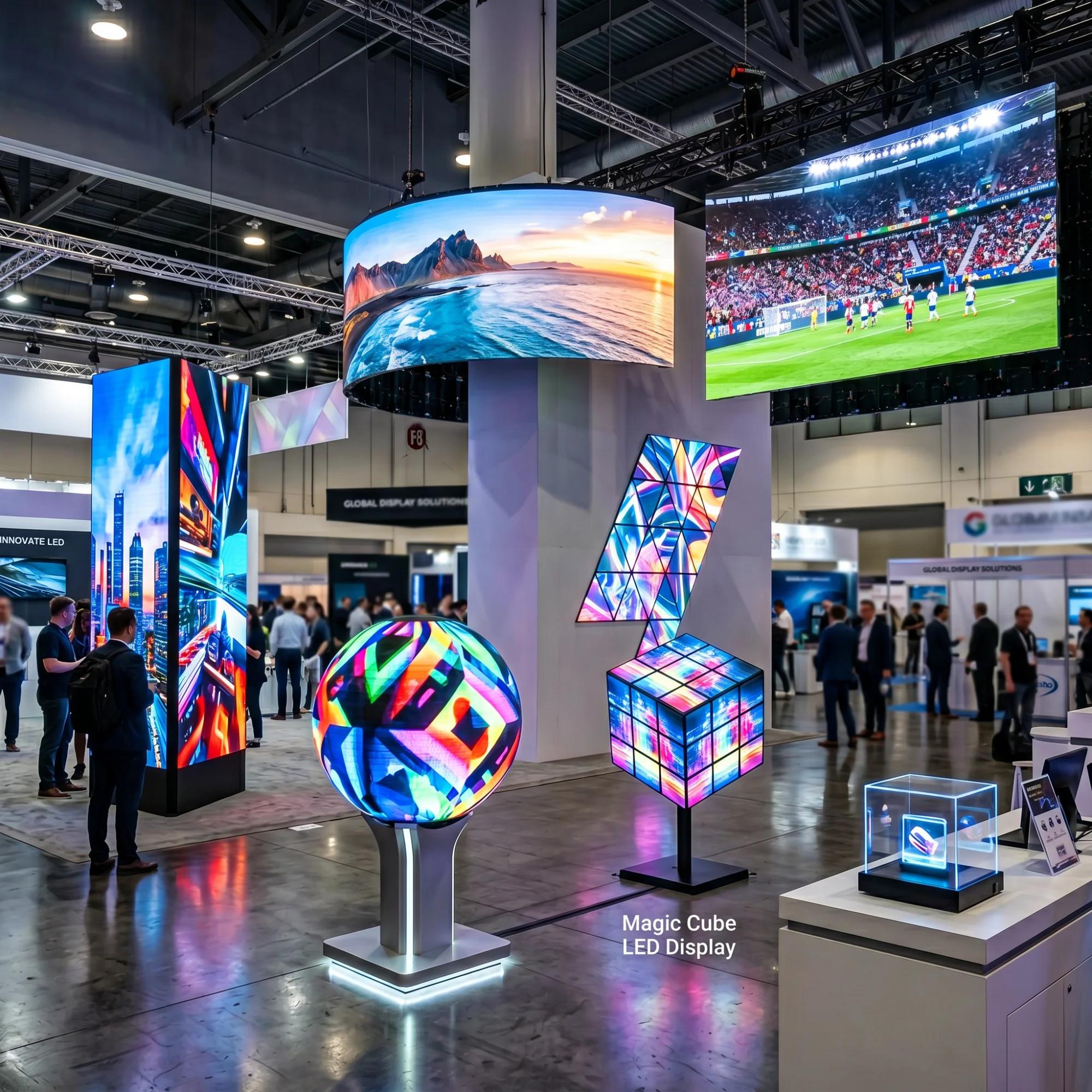
Packaging technology dictates optical behaviour and maintenance workflows—five prevalent categories appear across Tentech-compatible BOMs alongside evolving MicroLED roadmaps referenced at trade shows.
4.1 SMD LED Module
SMD (surface-mount device) modules solder RGB emitters onto PCB pads via high-speed placement—dominating fine-pitch indoor manufacturing thanks to repeatable reflow yields across batches exceeding 70% global module volume cited historically by analysts.
Advantages: mature ecosystem, scalable automation, balanced thermal impedance for mid pitches.
Disadvantages: extreme outdoor thermal gradients sometimes favour DIP derivatives depending on diode generation and mask geometry.
4.2 DIP LED Module
DIP (dual in-line package) exposes discrete RGB legs—legacy outdoor stalwart delivering directional brightness where coarse pitches (around P6 and larger classes) suffice.
Advantages: rugged highway-facing stacks, saturated lobes visible off-axis depending on bead orientation.
Disadvantages: pitch floor rarely rivals contemporary SMD/Mini grids without sacrificing transparency budgets.
4.3 COB LED Module
COB (chip on board) mounts bare dies directly—shortening interconnect inductance and widening thermal spreading paths once encapsulated—popular where bump resistance matters on rental fleets or interactive flooring.
Advantages: mechanical resilience post glob-top encapsulation; appealing COB uniformity when paired with automated calibration suites.
Disadvantages: field repairs demand hotter rework profiles versus swapping discrete SMD beads alone.
4.4 GOB LED Module
GOB (glue on board) laminates transparent resin across assembled tiles—enhancing UV resistance, waterproof scores and blunt-impact survivability common during trucking shocks or installer drops.
Advantages: toughened cosmetic surfaces ideal for broadcast studios needing glare-managed matte finishes.
Disadvantages: cured coatings complicate pinpoint bead rework—plan redundancy stocks accordingly.
4.5 Mini LED Module
Mini LED denotes tighter chip geometries (~50–200 µm class narratives per vendor briefings) spanning roughly P0.3–P1.5 pitches—cross-pollinating HDR partitioning tricks borrowed from LCD backlight ecosystems while preserving RGB-native contrast.
Applications migrating toward premium TVs, automotive HUD prototypes and cinematic grading suites cite multi-billion-dollar shipment forecasts—monitor Tentech roadmap blogs for validated Mini SKU launches versus vaporware demos.
Advantages: elite pixel density headroom for executive briefing installs demanding retina-class proximity viewing.
Disadvantages: elevated BOM sensitivity—yield fallout amplifies quoting volatility until fabs stabilise binning telemetry.
Factory Tour & Certificates — LED Display Module Manufacturing Trust
Beyond datasheets, buyers vet module vendors using factory photography and compliance dossiers aligned with multinational procurement gates—especially when integrating LED display modules inside franchise rollouts requiring bonded warehousing audits.
Explore Tentech's live-line imagery via our Factory Show narrative and downloadable collateral inside Certifications; procurement teams pair those artefacts with diode-batch calibration certificates during RFQs.
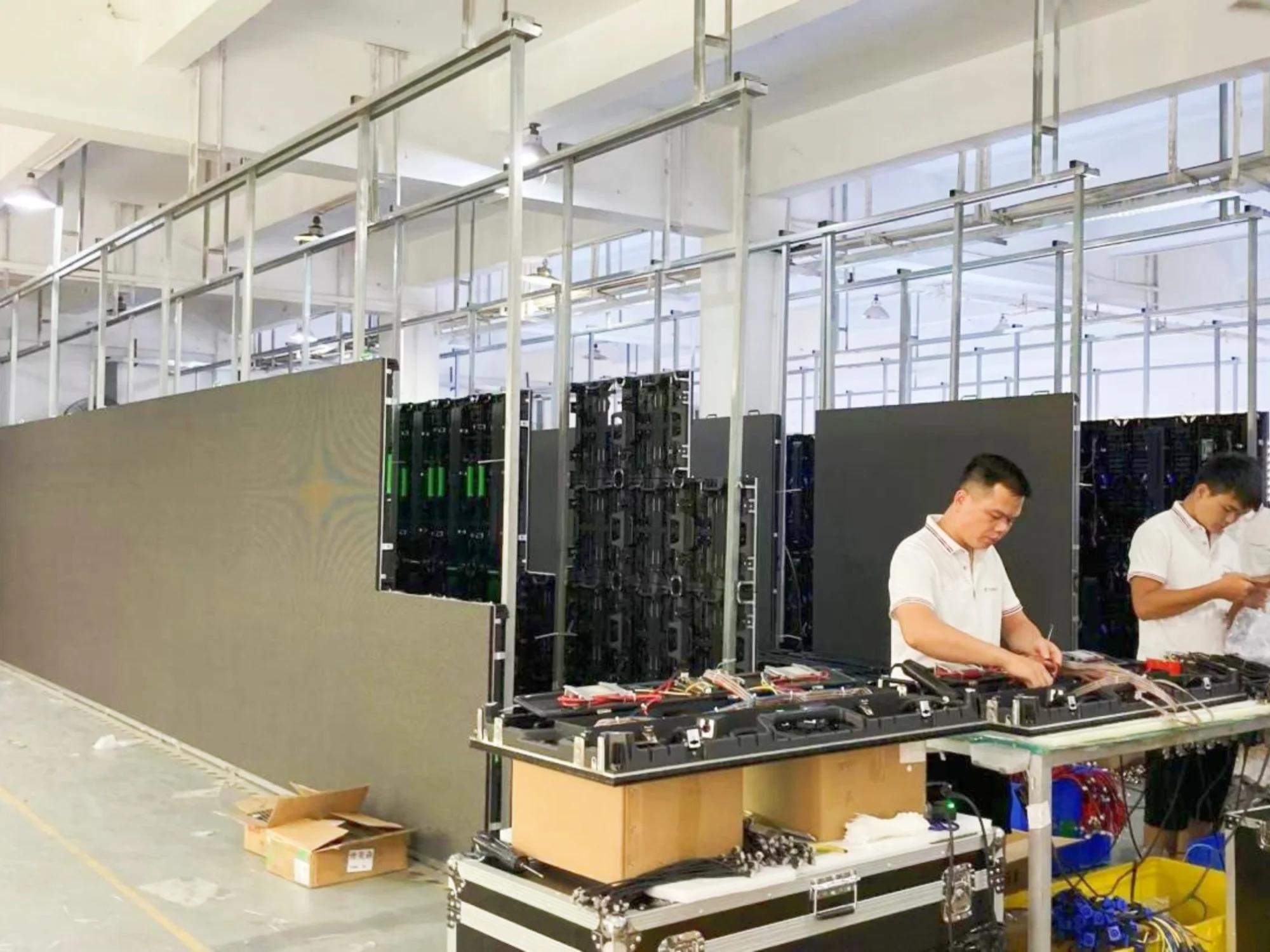
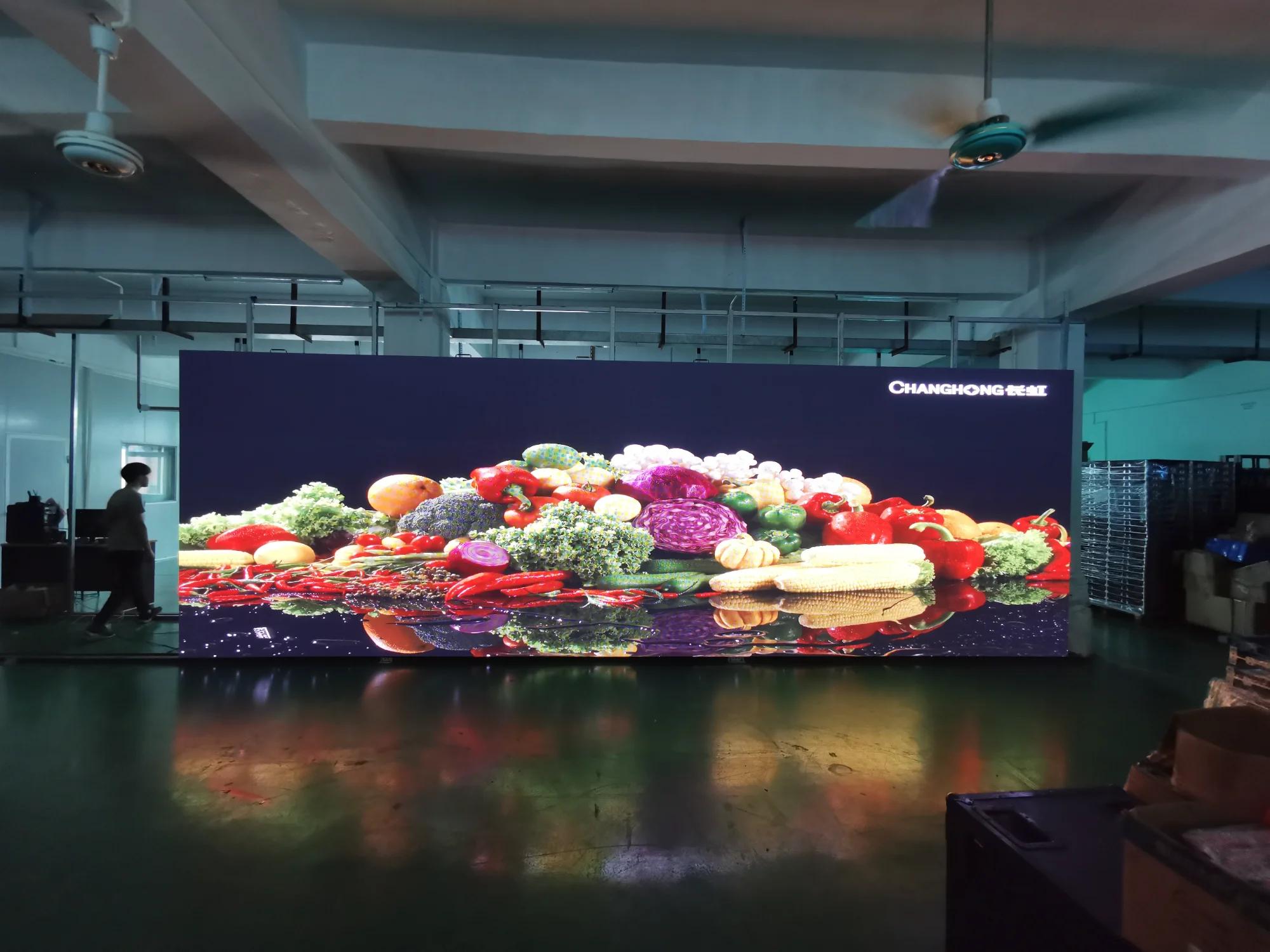
Factory tour — Shenzhen manufacturing footprint
LED display products ship from facilities where module lines, ageing corridors and QC checkpoints mirror real deployment loads—not slide decks alone.

Certificates & compliance snapshots
Procurement teams auditing LED display vendors often request certificates tied to EMC, electrical safety and factory QA—the archive stays updated with downloadable collateral.
LED Display Module FAQs
Accordion mirrors FAQ structured data below—ideal for capturing long-tail searches around LED screen modules.
5. Conclusions — Specify LED Display Modules With Tentech
LED display modules fuse multispectral storytelling with resilient mechanics—whether launching DOOH façades or upgrading corporate briefing theatres. Tentech couples diode sourcing transparency with touring-tested QA loops so repeated cabinet batches colour-match season after season.
Review immersive deployments inside our LED display case studies, scan corporate governance via About Us, then escalate BOM specifics through Contact Us when you need quotations tied to validated lattice files.
SEO focus: LED Display Module sourcing for indoor/outdoor LED screen modules — engineered factory-direct by Shenzhen Tentech Visual Technology Co., Ltd.