
When sourcing LED displays from manufacturers, many project integrators face a common question: Should I order LED modules only, or buy a fully complete LED screen ready for installation? Both options have their own advantages and limitations. Understanding the difference will help you make a smarter purchasing decision and control your project timeline and budget.
What is an LED display module?
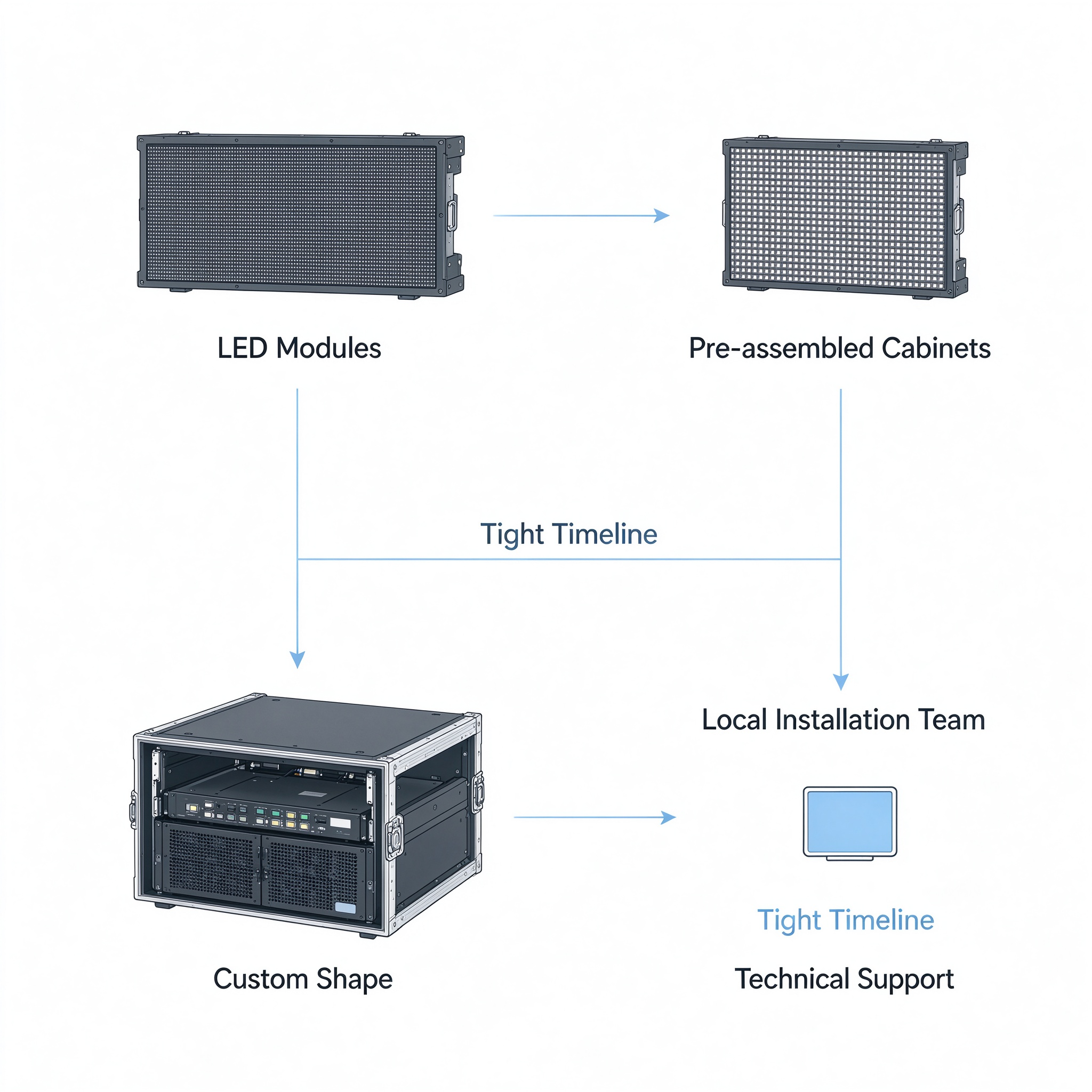
The LED module is the basic building block of any LED screen. It consists of LED lamp beads, driver IC, PCB board, mask and housing. Modules come in standard sizes, such as 320×160mm or 256×128mm.
Suppliers ship loose modules without cabinets, power supplies, receiving cards or wiring. You need to source matching cabinets, assemble all parts on-site, and complete wiring and debugging by your local technical team.
Benefits of LED modules
- Lower unit price. You only pay for the panel itself, so material cost is more competitive for large projects.
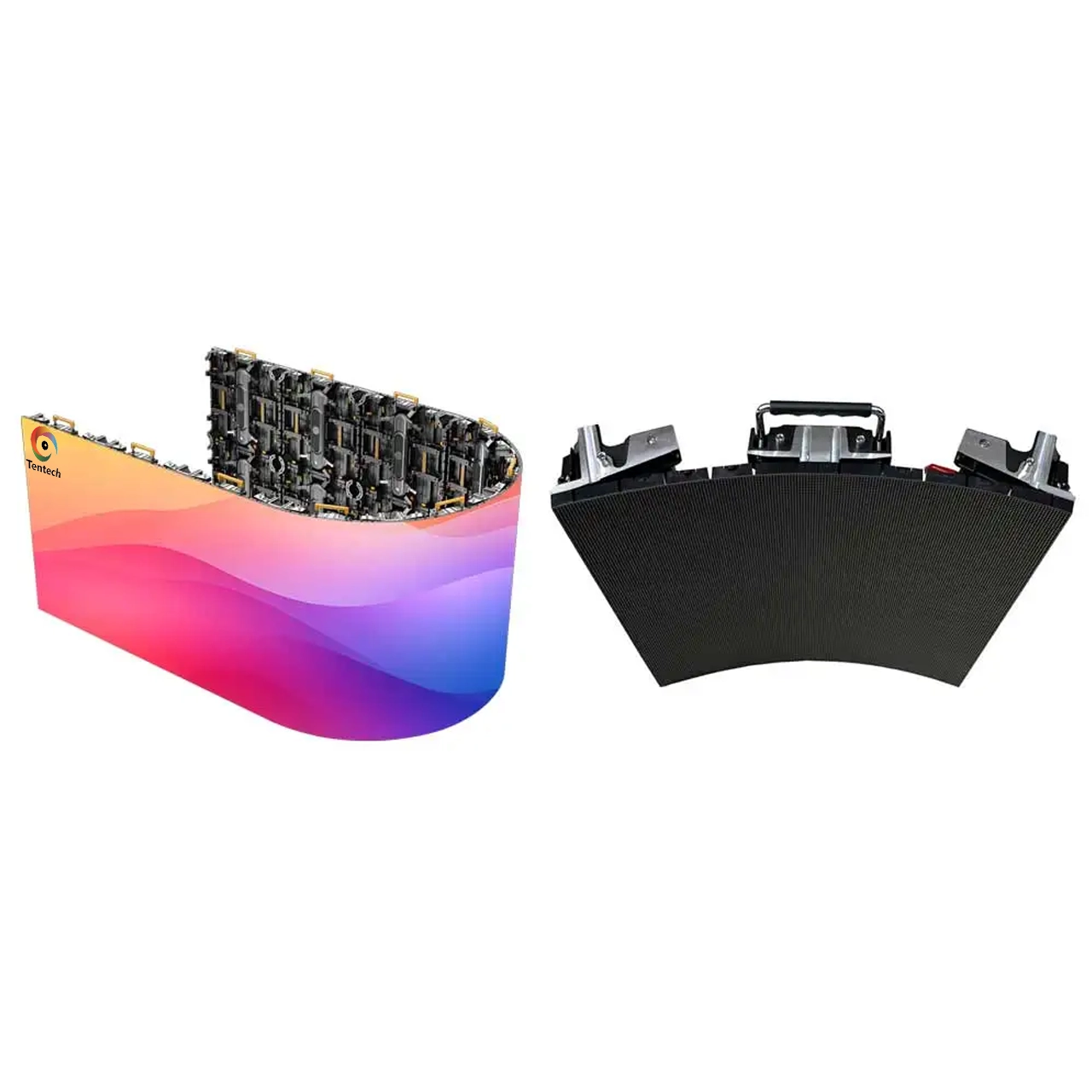
- Flexible cabinet customization. You can design custom cabinet sizes and frames to fit irregular walls or special venue shapes.
- Convenient spare parts storage. It is easy to stock a small number of spare modules for future repairs.
Drawbacks of LED modules
- Requires skilled technicians for assembly and calibration. Poor assembly will lead to uneven brightness, color difference or dead pixels.
- Longer on-site installation time. More labor work on site increases your construction cost.
- Extra sourcing work. You need to purchase cabinets, power supplies, control cards and cables separately.
What is a complete LED screen (full cabinet solution)?
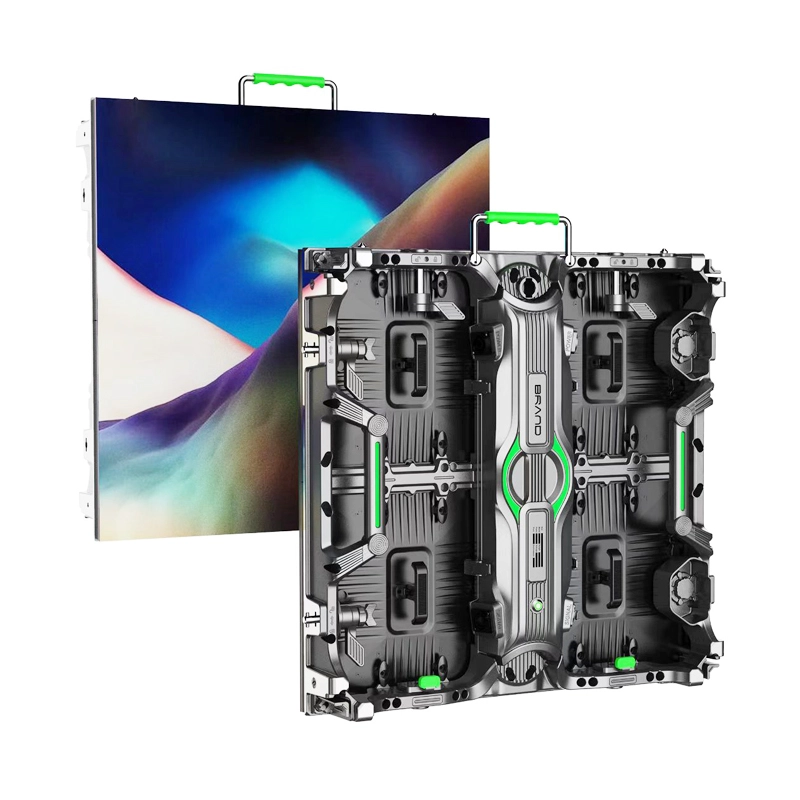
A complete LED screen means pre-assembled LED cabinets. The factory installs modules, power supplies, receiving cards and cables inside the cabinets. Each cabinet is fully tested before shipment.
When the goods arrive at your site, your team only needs to hang or stack the cabinets, connect signal and power cables, then do simple debugging.
Benefits of complete LED cabinets
- Fast installation. Greatly cuts on-site working hours, perfect for tight-deadline projects.
- Factory pre-calibration. Color and brightness are adjusted in advance, delivering consistent visual performance.
- Lower technical requirement. Your workers do not need deep knowledge of LED module assembly.
- Easier maintenance. Faulty cabinets can be replaced directly, saving troubleshooting time.
Drawbacks of complete LED cabinets
- Higher total cost. Assembly, testing and cabinet materials add to the factory price.
- Larger volume and heavier weight. Shipping cost will be higher than shipping loose modules.
- Less flexibility for non-standard shapes. Cabinets are produced in fixed sizes.
Which one should you choose?
✅ Choose LED modules only if:
- You have a professional local LED installation team
- Your project has irregular wall sizes or custom shapes
- You are handling a large-scale permanent project and want to cut material cost
- You already have a stable supplier for cabinets and accessories
✅ Choose pre-assembled complete LED cabinets if:
- Your project timeline is tight
- Your team lacks experienced LED assembly technicians
- It is a rental event screen, trade show booth or temporary installation
- You prefer simple on-site operation and fast after-sales troubleshooting
Extra tips to reduce project risks
- Always ask the supplier to send testing videos before shipment, no matter modules or full cabinets.
- Confirm spare parts ratio. We recommend preparing 2–5% spare modules for every project.
- Check compatibility. If you buy modules separately, double-check that control system and power supplies match the module specifications.
- Consider shipping cost. For oversea orders, weight and volume can make a big difference to your total landed cost.
Final thoughts
There is no “better” option universally. Modules are great for cost-saving and custom jobs, while pre-assembled full cabinets save labor and reduce on-site risks. Share your project details with our engineering team, and we will recommend the most suitable solution for your venue.
CTA
Looking for a trustworthy LED display manufacturer offering both LED modules and pre-assembled LED cabinets? Contact us now to get specification sheets, factory test reports and wholesale pricing.