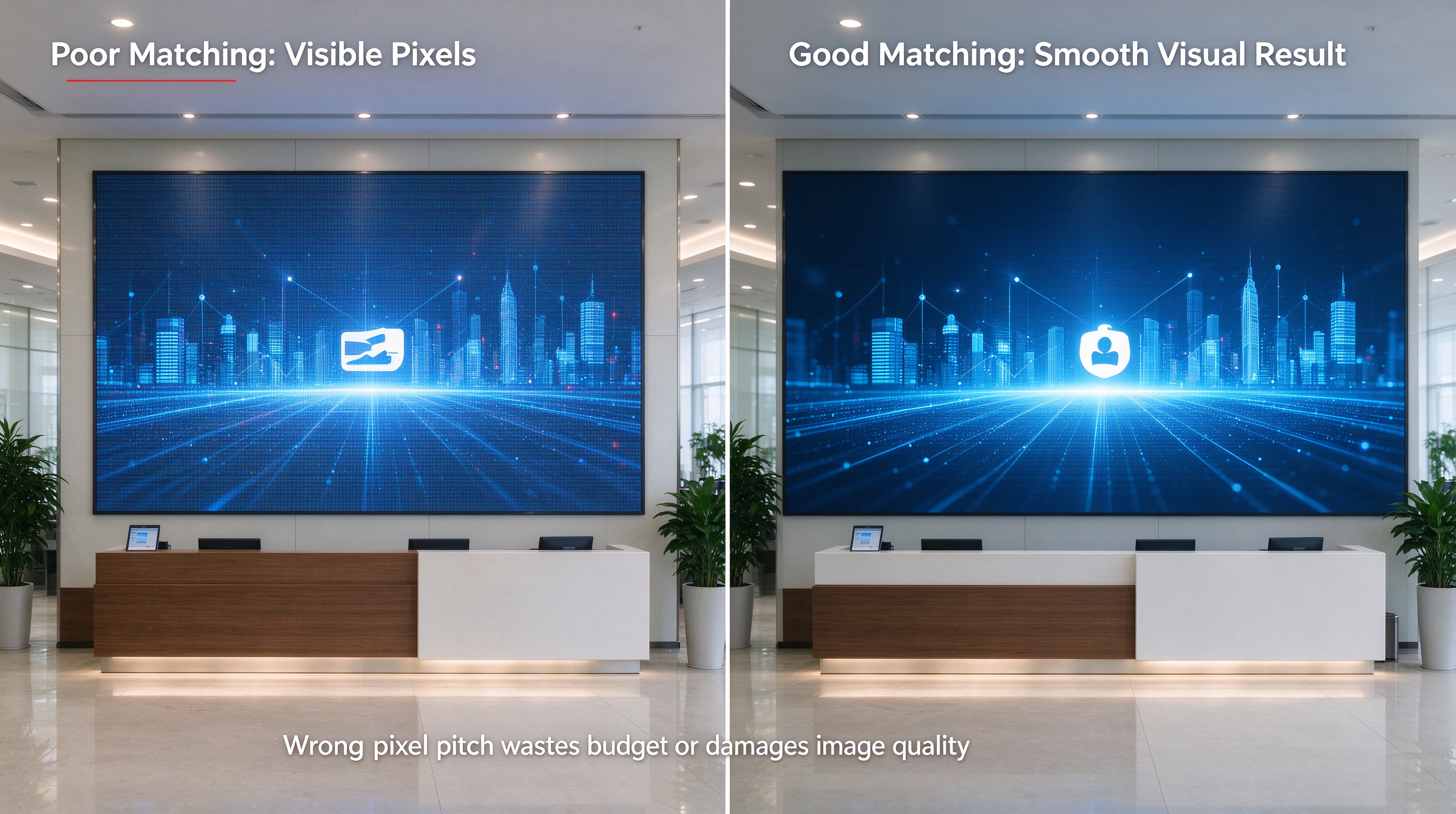

When you quote an LED display project, pixel pitch and viewing distance are always the first parameters to confirm. Many buyers simply choose a pixel pitch based on price or previous project experience. Without correct calculation, you may end up with visible pixel dots at close range, or overspend on ultra-fine pitch that brings no extra visual benefit.
Understanding how to calculate LED display pixel pitch and viewing distance helps importers, installers and wholesale resellers deliver satisfying projects and reduce after-sales risks. Tentech’s engineering team summarizes the universal rules and practical calculation methods in this guide.
What is LED pixel pitch?
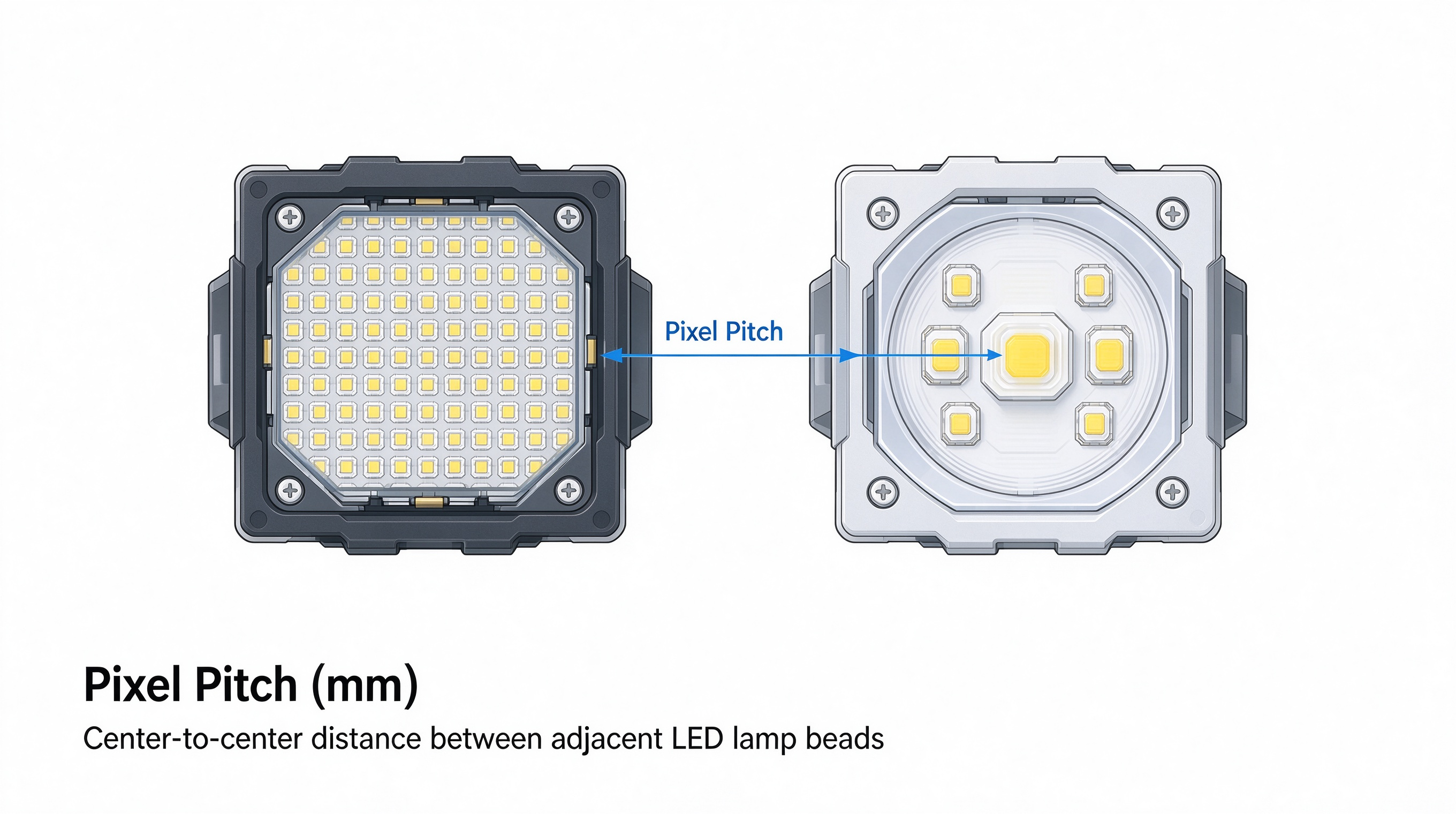
Pixel pitch (often written as P value, such as P2.5, P3.91, P5) refers to the distance between the centers of two adjacent LED lamp beads, measured in millimeters.
- Smaller pixel pitch: higher resolution, clearer image, higher cost, suitable for short viewing distance
- Larger pixel pitch: lower resolution, lower price, for long-distance viewing scenarios
Key viewing distance definitions
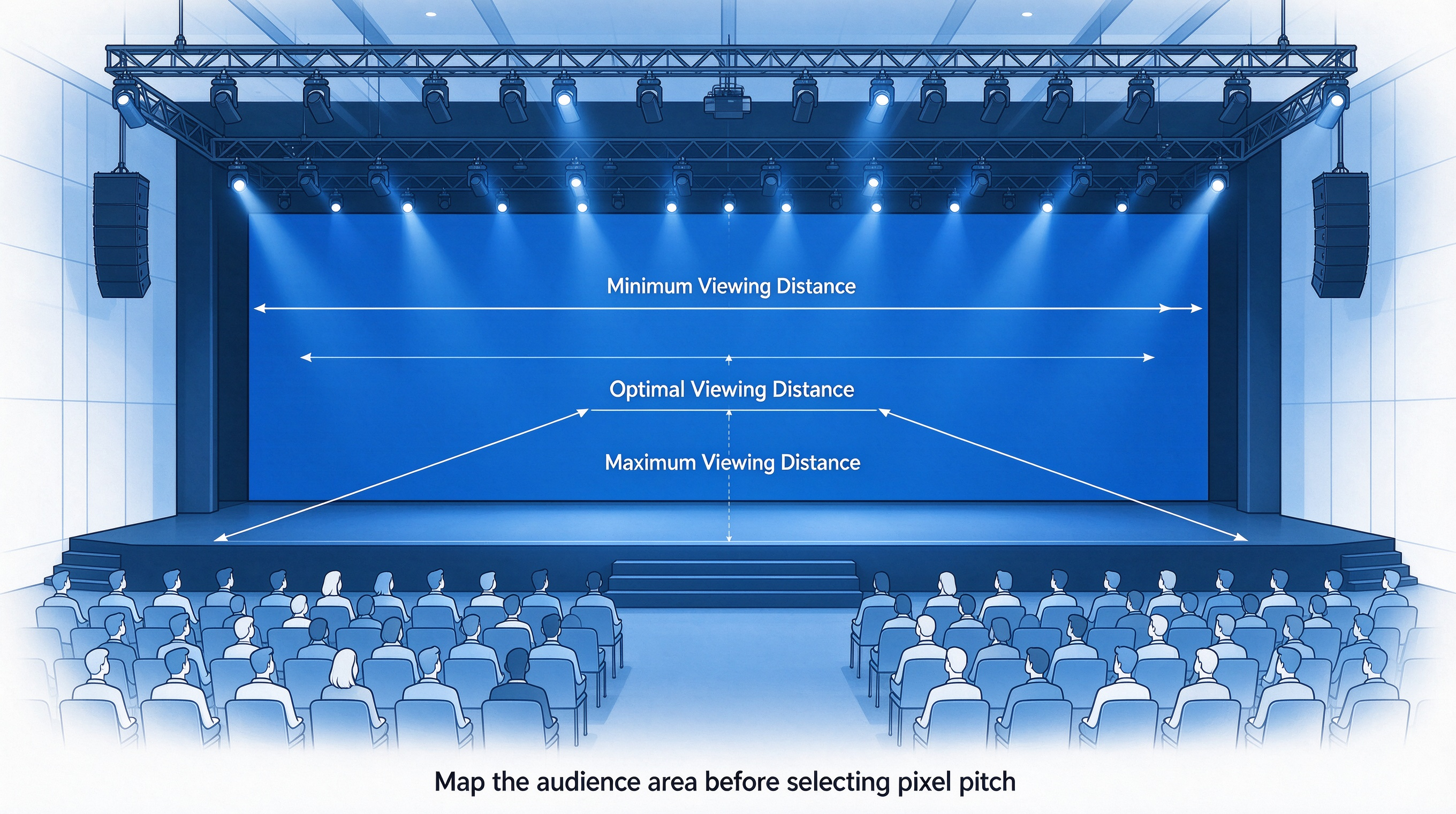
There are 3 key distance indicators you need for every project:
- Minimum viewing distance: The closest distance where viewers cannot see individual LED pixels. Formula: Minimum viewing distance ≈ Pixel pitch (mm) × 1000 Example: P2.5 screen, min viewing distance = 2.5 ×1000 = 2500mm = 2.5 meters. Audience standing closer than 2.5m will see obvious pixel grains.
- Optimal viewing distance: The range to get the best visual experience. Formula: Optimal viewing distance ≈ Pixel pitch (mm) × 2000 ~ 3000 For P2.5: optimal distance is 5m –7.5m.
- Maximum viewing distance: The furthest position to recognize clear image content. Formula: Maximum viewing distance ≈ Pixel pitch (mm) × 5000
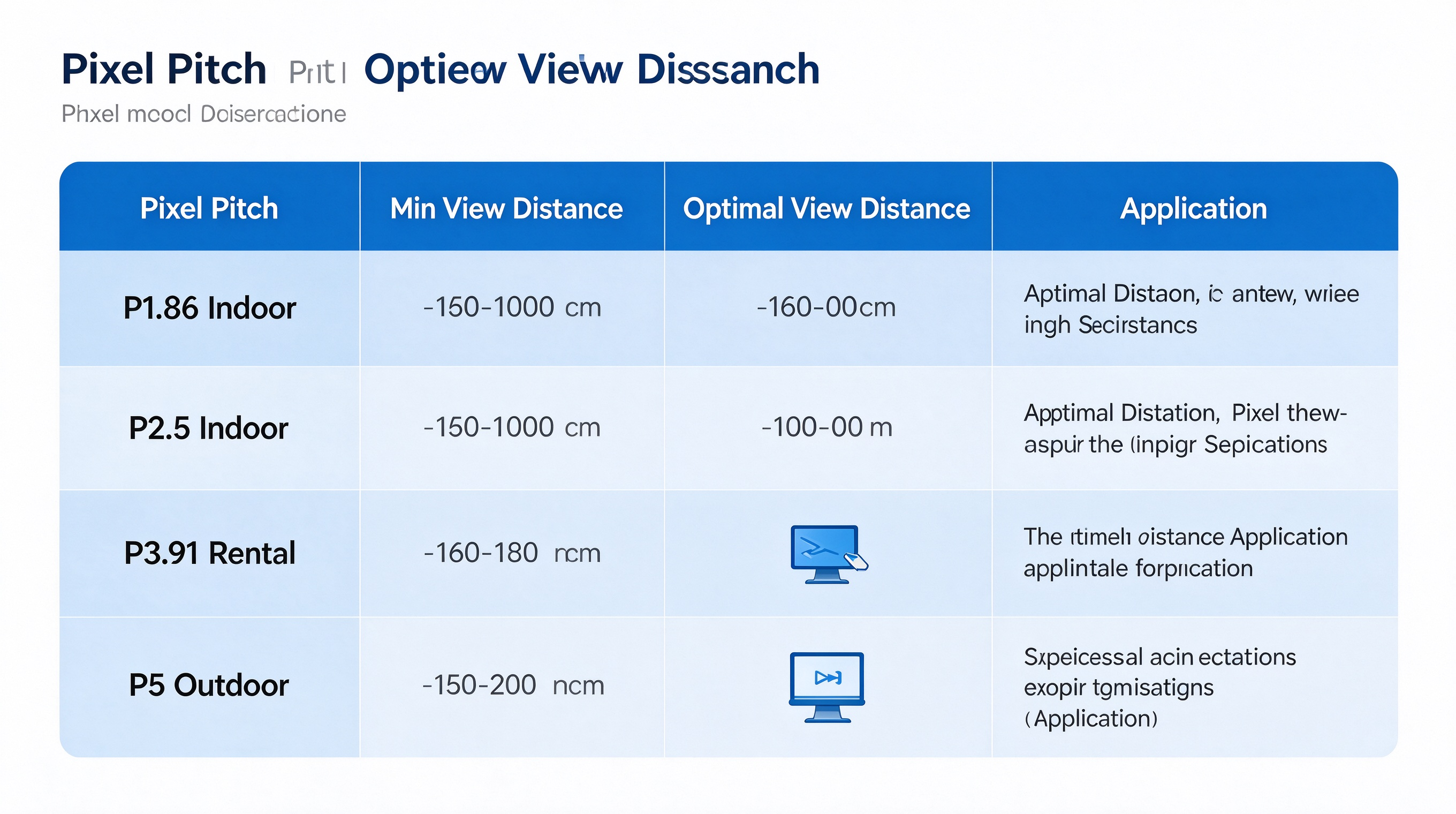
Quick reference table for common pixel pitch
| Pixel Pitch | Min View Distance | Optimal View Distance | Recommended Application |
|---|---|---|---|
| P1.86 Indoor | 1.86 m | 3.7 ~ 5.6 m | Conference room, high-end retail store, control room |
| P2.5 Indoor | 2.5 m | 5 ~ 7.5 m | Lobby, shopping mall, brand storefront |
| P3.91 Rental | 3.91 m | 7.8 ~ 11.7 m | Stage backdrop, exhibition, event rental LED |
| P5 Outdoor | 5 m | 10 ~ 15 m | Plaza screen, building exterior advertising |
Common mistakes when matching pixel pitch and viewing distance
- Buy ultra-small pixel pitch for long-distance outdoor projects, greatly increasing project cost without visual improvement.
- Use large pixel pitch screen for close-view indoor application, pixels are visible and clients reject the finished screen.
- Only calculate average distance, ignore the closest audience position in the venue.
- Separate screen size from pixel pitch selection. Same pixel pitch on a bigger wall creates much better immersion.
Practical tips for your LED project
- Collect site data first: measure the shortest viewing distance from audience to screen. Use this number to select pixel pitch, not the farthest distance.
- Consider screen size. Even with the same pixel pitch, larger LED walls deliver better visual immersion.
- Check ambient brightness: outdoor environments need high brightness panels, indoor rooms use lower brightness to avoid eye strain.
- Consult your LED manufacturer. Share site photos and dimension data with Tentech, our engineers can recommend the most cost-effective pixel pitch solution for your wholesale and engineering projects.
Final Words
Pixel pitch calculation does not need complicated software. Mastering these simple formulas allows you to quickly evaluate LED display solutions for every tender and client inquiry. Proper matching between pixel pitch and viewing distance balances visual quality and budget, helping you win more LED engineering projects.