
Naked eye 3D LED displays are changing how brands present visual content in public spaces. From oversized objects that appear to emerge from building corners to animated creatures that seem to move beyond the screen, these displays transform ordinary digital advertising into an experience that attracts attention and encourages people to stop and watch.
Their appeal goes beyond screen size or image brightness. A successful naked eye 3D project combines LED display technology, carefully designed content, screen geometry, and a suitable viewing perspective.
However, not every LED screen playing a 3D animation produces the same effect. Understanding the technology behind these displays helps businesses, advertising agencies, and project contractors make better decisions about equipment, content production, and installation.
In this article, we explain how naked eye 3D LED displays work, what technical factors influence the visual result, and why they have become an appealing option for digital advertising and immersive brand experiences.
1. What Is a Naked Eye 3D LED Display?
A naked eye 3D LED display is an LED display system designed to create a perception of three-dimensional depth without requiring viewers to wear special glasses.
In many large outdoor advertising installations, the effect is created through anamorphic 3D content. Designers use perspective, shading, shadows, object movement, and carefully controlled proportions to make a two-dimensional image appear three-dimensional from a particular viewing position.
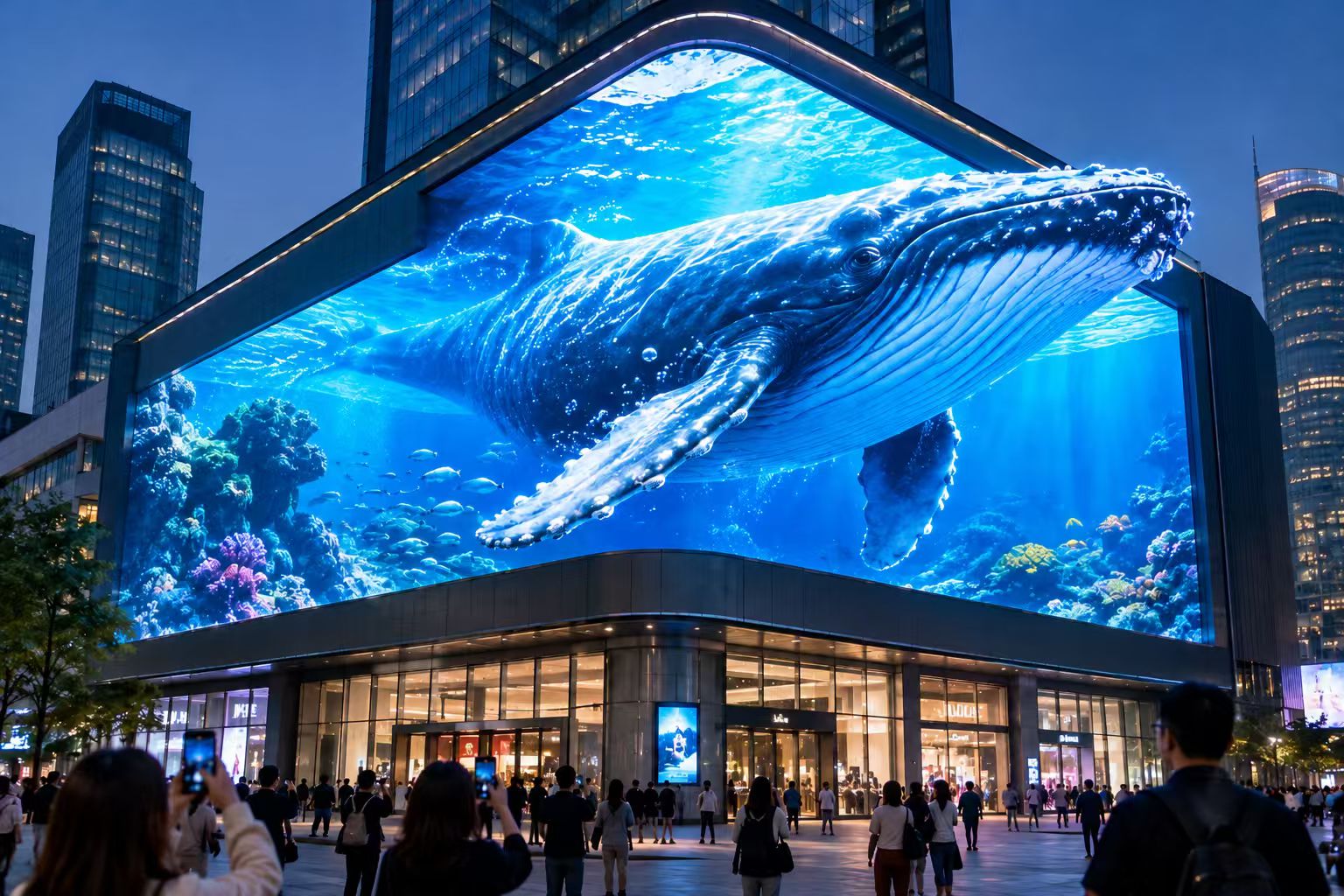
For example, a product may appear to project beyond the screen surface, a vehicle may seem to drive out of a display, or a giant animal may appear to occupy the space inside a building corner.
The LED screen itself does not necessarily contain special hardware that generates true stereoscopic vision. In these installations, the three-dimensional appearance mainly comes from how the content is designed and how viewers perceive the image.
This distinction matters because the term “naked eye 3D” can also refer to autostereoscopic displays, which use optical technologies to deliver different views to viewers' eyes without glasses. That is a different technical approach from the perspective-based illusion commonly seen on large outdoor LED billboards.
For most commercial corner-screen projects, the key is coordinating the physical display with the content and the intended viewing position.
2. How Does Naked Eye 3D LED Technology Work?
The effect is created by combining several visual and technical elements rather than relying on one special LED component.
Anamorphic perspective
Anamorphic content is deliberately distorted during production so that it appears correctly proportioned from a selected viewing position. When shown on a properly configured display, the image can appear to have depth or extend beyond the screen's physical boundary.
The content must be designed with the display's actual geometry in mind. If the screen consists of two surfaces meeting at a corner, the content needs to account for both surfaces and their relationship to the intended viewpoint.
Depth cues and object movement
The human visual system interprets depth using several cues. Naked eye 3D content takes advantage of these cues through visual techniques such as:
· Perspective: Objects change apparent size and position to suggest distance.
· Occlusion: One object partially covers another, helping establish which appears closer.
· Light and shadow: Shading and cast shadows help objects appear to have volume.
· Motion: Objects moving toward or away from the apparent viewer reinforce the sense of depth.
· Screen-boundary effects: An object may appear to cross the apparent edge of the display, creating the impression that it extends into real space.
When these elements are coordinated with the screen's physical layout, a flat video can create a convincing three-dimensional illusion from the intended viewing zone.
The role of the LED display
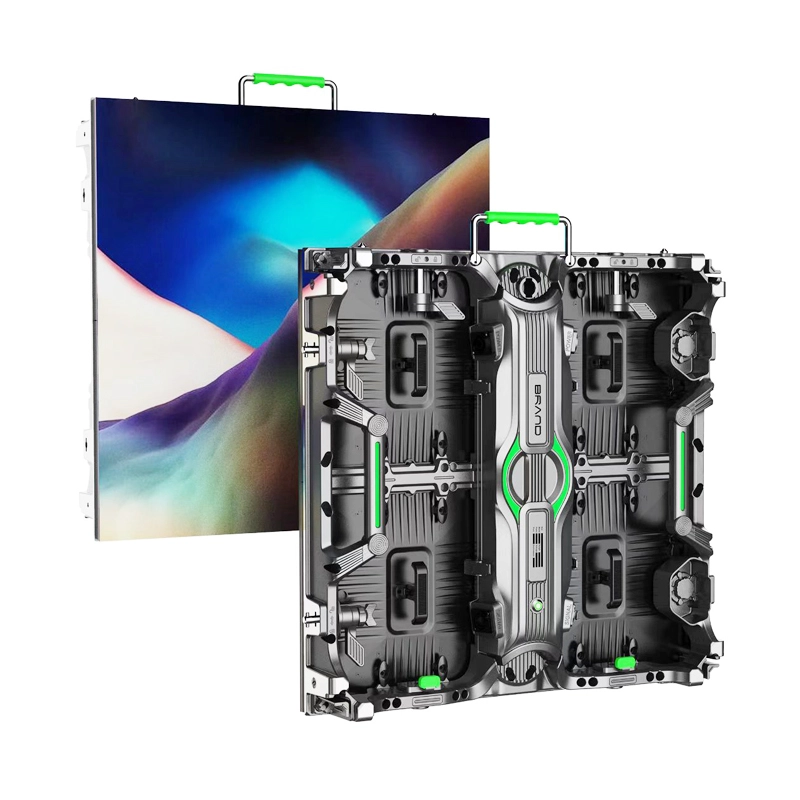
Although the content creates much of the illusion, display performance still matters. Inconsistent brightness, poor color reproduction, visible gaps, inaccurate cabinet alignment, or insufficient image resolution can weaken the result.
The system also needs an appropriate video processor, correct display mapping, and a playback workflow that preserves the intended image geometry.
In other words, creative content and LED display engineering must work together. Neither can compensate completely for serious problems in the other.
3. Why Are Corner LED Screens Commonly Used for Naked Eye 3D?
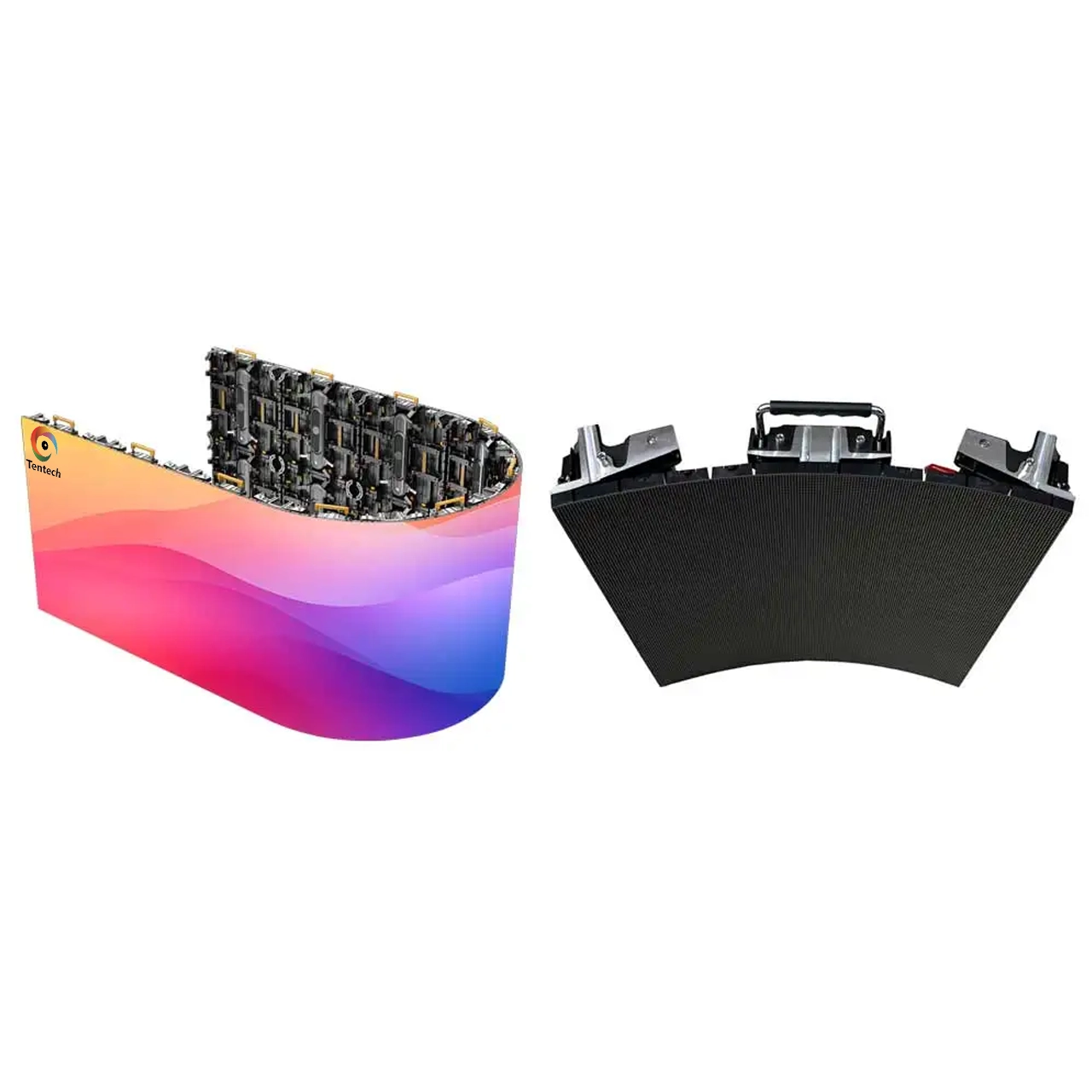
One of the most recognizable formats is the L-shaped LED display installed around the corner of a building. Two display surfaces meet at an angle, creating an additional visual boundary that content designers can use to simulate depth.
Compared with a conventional flat screen, a corner configuration can make it easier to create effects in which objects appear to emerge from a virtual space or move around the corner.
However, an L-shaped installation does not automatically produce a convincing 3D effect. Its geometry, content design, and viewing direction must work together.
Screen geometry and viewing position
The content designer needs to know the actual dimensions of both display surfaces, the angle between them, and their relative pixel resolutions. The intended viewing position must also be considered during content production.
If the content assumes an exact 90-degree corner but the installed surfaces have a different angle, the illusion may appear distorted. Likewise, a viewing position substantially different from the designed viewpoint can weaken the intended depth effect.
Can a flat LED screen create a naked eye 3D effect?
Yes. A flat LED display can present perspective-based content that creates a sense of depth. However, without a physical corner or another relevant screen geometry, certain effects may be less convincing or may depend more heavily on the content itself.
The best configuration depends on the site, audience movement, available installation space, creative concept, and project budget.
4. Which LED Display Specifications Matter Most?
Selecting an LED display for a naked eye 3D project requires more than choosing a visually impressive screen. The display must support the content's resolution, viewing conditions, and installation geometry.
Pixel pitch and image detail
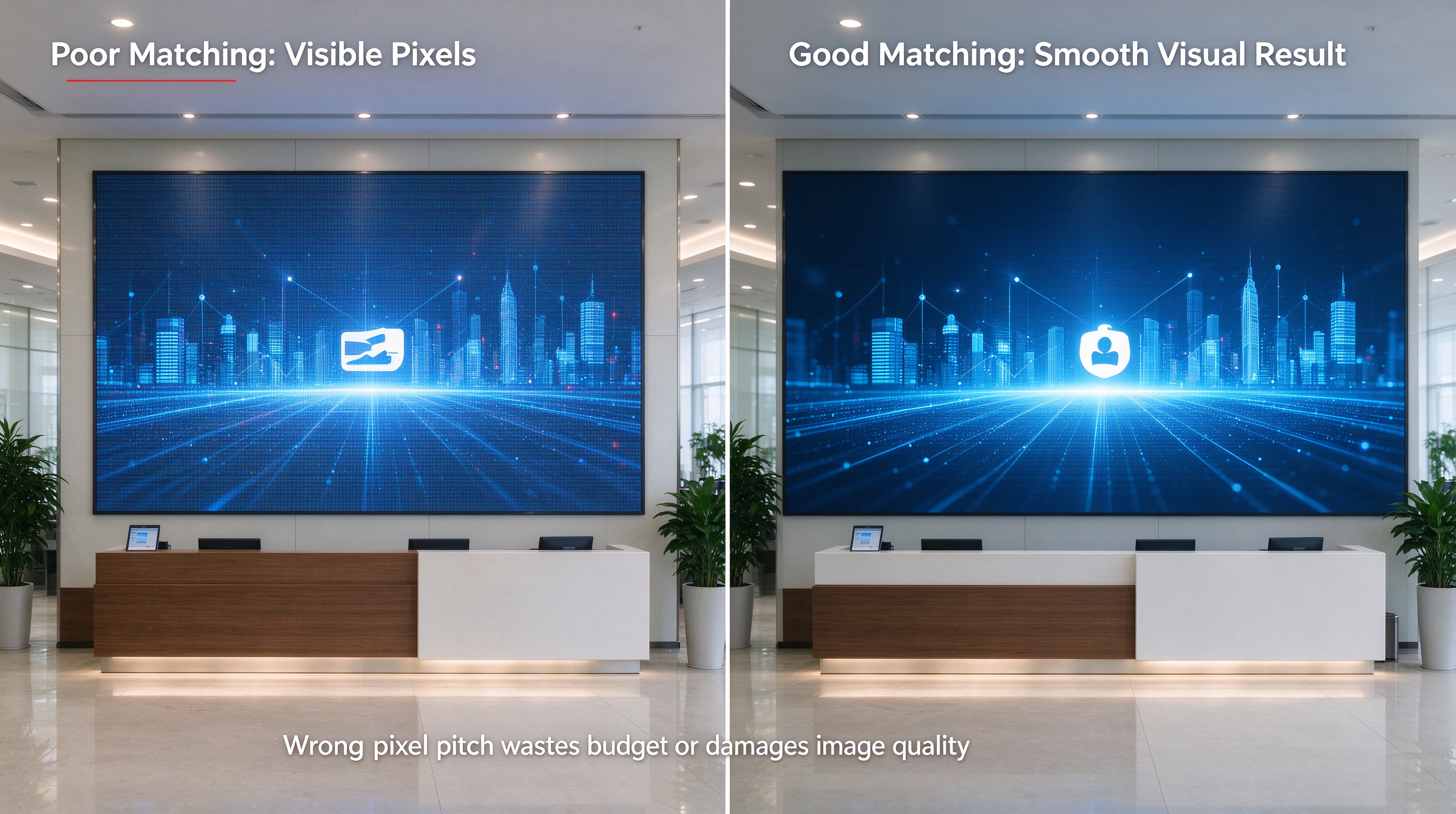
Pixel pitch is the distance between the centers of adjacent pixels, measured in millimeters. A smaller pixel pitch provides a higher pixel density and can help preserve fine details when the screen is viewed from relatively close range.
For naked eye 3D content, image details such as edges, textures, reflections, and shadows may be essential to the illusion. The appropriate pixel pitch therefore depends on viewing distance, screen dimensions, content complexity, and budget.
A large outdoor screen viewed from across a public square may not require the same pixel pitch as a display intended for close-range viewing in a commercial complex.
Brightness and ambient light
Outdoor LED displays may need high brightness to remain visible in strong daylight. The required level depends on direct sunlight, screen orientation, surrounding buildings, and operating hours.
For a convincing 3D effect, brightness should support clear contrast and visible details rather than simply reaching the highest possible output. Appropriate brightness control is also important when lighting conditions change.
Refresh rate and grayscale performance
If the content will be recorded or shown in livestreams, refresh rate and camera compatibility deserve particular attention. An unsuitable combination of display scanning, camera shutter settings, and processing can produce flicker or horizontal bands in recorded footage.
Grayscale performance is also relevant because many 3D effects rely on smooth shading, gradients, and subtle differences between light and dark areas.
The final system should be tested with representative content and, where necessary, the actual cameras used for the production.
Cabinet alignment and display uniformity
For a corner display, the meeting point between surfaces is particularly important. Cabinet alignment, flatness, color consistency, and correct signal mapping all affect how seamlessly the content crosses the screen boundary.
The display design should also allow for practical installation, maintenance access, structural support, and the environmental conditions of the site.
5. Why Is Naked Eye 3D LED Advertising So Popular?
Naked eye 3D advertising combines large-scale digital display with visual storytelling. It gives advertisers another way to present a product, communicate an idea, or create a memorable public installation.
It attracts attention
A carefully designed 3D illusion can interrupt the visual pattern of an ordinary advertising environment. When an object appears to break out of a screen or move through a virtual space, people may be more inclined to stop and watch.
The effect is especially useful in high-footfall locations where brands compete for attention.
It creates shareable content
Distinctive visual effects can encourage people to photograph or record a display and share it on social media. A campaign can therefore reach audiences beyond the physical location.
However, shareability depends on more than the technology. The subject, storytelling, execution, location, and relevance to the audience all influence whether people choose to share the experience.
It provides a creative product showcase
A naked eye 3D campaign can emphasize the form, movement, or function of a product in a way that conventional advertising may not. For example, designers can show a product rotating in virtual space, reveal internal components through animation, or make a product appear to interact with its surroundings.
The strongest creative concepts connect the visual effect to the actual brand message rather than using depth purely as decoration.
It can refresh familiar locations
Building corners, commercial plazas, retail facades, and entertainment districts can become recognizable visual destinations when a display is used effectively. For property developers and venue operators, this can create additional opportunities for advertising, event promotion, and branded experiences.
The outcome still depends on factors such as site suitability, audience traffic, content quality, and campaign planning.
6. Where Are Naked Eye 3D LED Displays Used?
Naked eye 3D technology can be applied across several commercial and public environments.
Commercial buildings and outdoor advertising: Large corner screens can display brand campaigns, animated products, and visual stories designed around the architecture.
Shopping malls and retail spaces: Retailers can use 3D content to introduce new products, promote seasonal campaigns, or make a particular storefront more visually distinctive.
Product launches: Brands can use dramatic depth effects to reveal a product, emphasize its design, or build anticipation around an announcement.
Entertainment and tourism destinations: Large LED installations can feature animated scenes and location-specific content that contribute to the identity of a public space.
Events and exhibitions: Selected LED configurations can create immersive visual effects at promotional events, although the best screen format depends on viewing angles, venue layout, and how the audience moves around the display.
Different environments call for different screen designs. A permanent outdoor corner installation has different structural, environmental, and maintenance requirements from a temporary event display.
7. What Should Be Considered Before Starting a Naked Eye 3D Project?
The visual concept may be the most noticeable part of a naked eye 3D installation, but several practical decisions should be made before the LED screen is selected.
Confirm the location and viewing zone
Study where the audience will stand, how people approach the display, and which viewpoints are most important. Buildings, trees, street furniture, and surrounding structures may obstruct the view.
For perspective-based content, define the primary viewing position early. If viewers need to see the effect from multiple directions, the content and display layout may require a different approach.
Coordinate screen design and content production
The physical screen dimensions and configuration should be confirmed before final content production. For corner displays, the design team needs accurate information about each surface, the corner angle, pixel dimensions, and how the processor maps the content to the screen.
Creating the animation before these details are established can lead to additional revisions, mismatched geometry, and increased costs.
Plan for installation and structural requirements
Permanent outdoor screens require appropriate support structures, suitable electrical infrastructure, maintenance access, and environmental protection for the actual site conditions.
For installations on building facades, structural loads, wind exposure, mounting details, electrical safety, and relevant permits must be assessed by qualified professionals. The screen should not be treated as safe to install simply because the display cabinets are designed for outdoor use.
Consider the complete project budget
A naked eye 3D project may involve several cost categories:
· LED display cabinets, processing equipment, and control systems.
· Supporting structures, installation, and electrical work.
· Site assessment and display geometry planning.
· Custom 3D modeling, animation, and content revisions.
· Playback equipment, testing, and commissioning.
· Ongoing maintenance and future content updates.
The total cost depends on project scale, technical specifications, installation complexity, and creative requirements. Budgeting for content and engineering alongside the display hardware helps avoid a situation in which the screen is installed but the intended visual effect cannot be delivered effectively.
8. How to Choose the Right Naked Eye 3D LED Display Supplier
A capable supplier should understand both the LED display system and the installation requirements that affect the final visual result.
Before making a decision, ask potential suppliers the following questions:
1. Can the proposed display support the required flat, curved, or corner configuration?
2. What pixel pitch, brightness, and resolution are appropriate for the actual viewing conditions?
3. How will the cabinet layout and screen geometry be matched to the content?
4. What video processing and playback equipment is needed?
5. How will color uniformity, cabinet alignment, and the corner transition be checked?
6. What are the structural, electrical, and environmental requirements for the installation?
7. Does the supplier provide technical support during commissioning and ongoing operation?
8. Who is responsible for producing, adapting, and testing the 3D content?
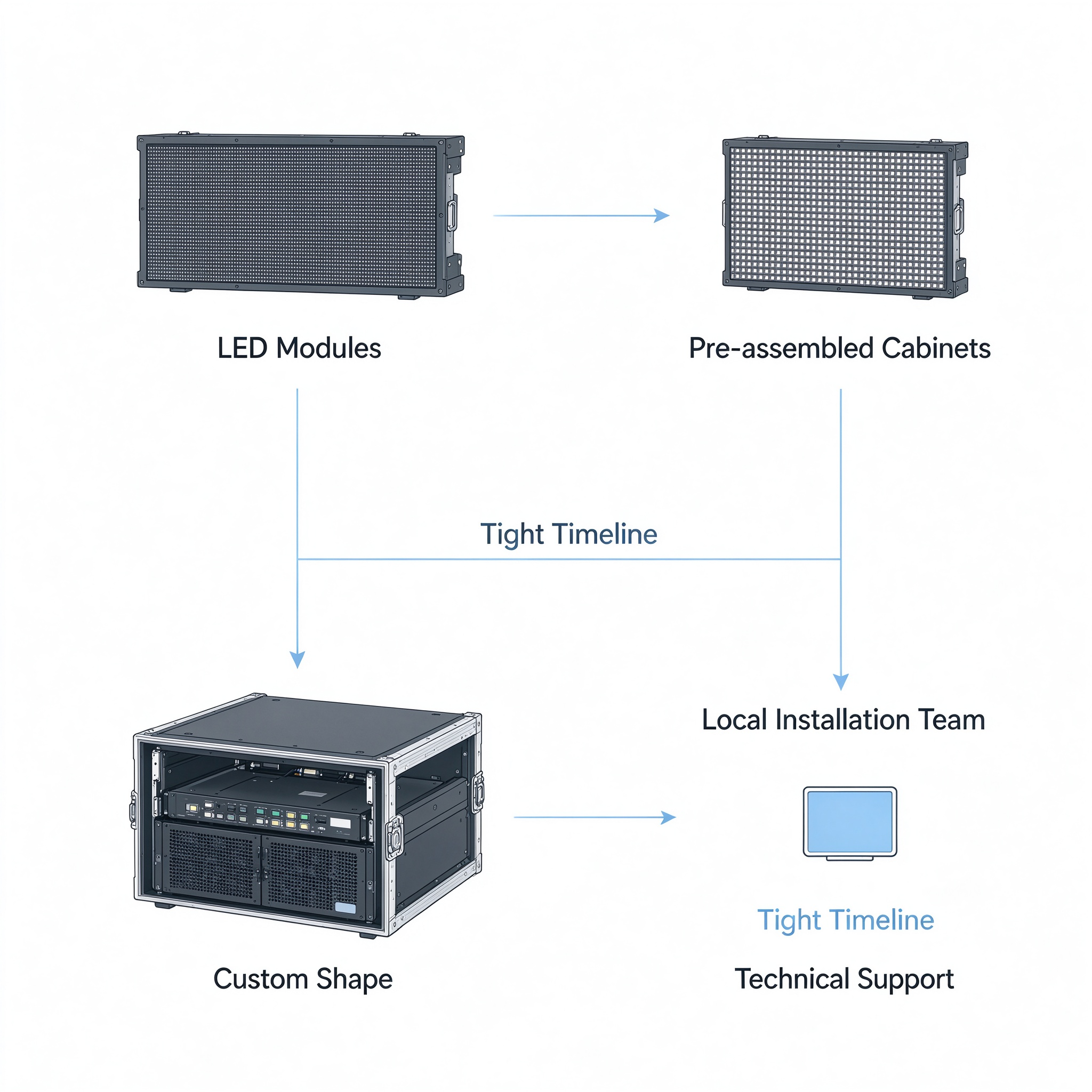
Ask for technical drawings and confirmation of the proposed configuration before finalizing the project. For an existing installation, a supplier should also review the site's actual dimensions rather than assuming that a new screen can use the same content geometry as another project.
A supplier with relevant project experience can help coordinate screen engineering, processing, installation, and creative requirements. This coordination is important because a technically functional LED screen may still deliver a disappointing result if the content and physical display are not properly matched.
Frequently Asked Questions
Does a naked eye 3D LED display require special glasses?
No. The commonly seen outdoor 3D billboard effect is designed to be visible without special glasses. It usually relies on perspective-based content and the viewer's interpretation of visual depth cues.
Other glasses-free 3D technologies, such as autostereoscopic displays, use different optical methods to deliver multiple views.
Is special LED hardware required to create a naked eye 3D effect?
Not necessarily. Many large outdoor installations use conventional LED display technology with a suitable screen configuration and specially produced anamorphic content. However, the display must have specifications and a physical layout appropriate for the project.
Can a naked eye 3D LED display work from every viewing angle?
Not all perspective-based installations provide the same effect from every angle. The illusion is usually strongest within a defined viewing zone, and it may appear less accurate from other positions.
The expected viewing area should be considered during site planning and content production.
Can an ordinary 2D video be used on a naked eye 3D LED screen?
Yes. These displays can show ordinary 2D content when configured appropriately. However, standard video will not automatically create the same depth illusion as content designed for the installation.
Is an L-shaped LED screen essential for naked eye 3D?
No. A corner configuration is common because it provides useful geometry for perspective-based effects, but a flat screen or another suitable display configuration can also create a 3D illusion. The appropriate solution depends on the creative concept and the intended viewing position.
How much does a naked eye 3D LED display cost?
There is no single standard price. Costs depend on screen size, pixel pitch, brightness, cabinet design, processing equipment, structural work, installation conditions, and the complexity of the custom content. A meaningful quotation should specify both the display system and the services required to deliver the complete project.
Conclusion
Naked eye 3D LED displays combine digital display technology with carefully designed visual illusions to create distinctive advertising and public experiences. Their effectiveness depends on how well screen geometry, pixel resolution, brightness, content production, and viewing conditions work together.
For businesses considering a naked eye 3D project, the first step is to identify the intended audience and viewing location. The next is to coordinate the LED display configuration with the content-production process and the site's technical requirements.
A successful installation is not simply a large LED screen playing a dramatic video. It is a complete visual system in which the hardware, geometry, content, and installation are designed to support the same result.