
P2.6 Outdoor Rental LED Display: Complete Buyer’s Guide & Key Specs
If you work in event production, AV integration, or rental business, you have probably heard a lot about P2.6 outdoor rental LED displays.
Many buyers assume “P2.6 is just P2.6”, but there is a huge difference between a screen built for permanent installation and one designed specifically for the tough life of rental.
Cheap‑looking quotations often hide compromises in components, mechanical design and performance parameters that will show up only when you are already on‑site at an event.
In this guide, we break down every critical specification, explain what they really mean, and share practical checks you can perform before confirming your order.
What does P2.6 actually mean?
The number P2.604 refers to the pixel pitch: the centre‑to‑centre distance between two adjacent LED lamps, measured in millimetres.
For P2.6, the exact value is 2.604 mm, not a rounded‑off 2.6 mm.
- Pixels per cabinet (500×500 mm): 192 × 192 pixels
- Pixel density: 147 456 pixels / m²
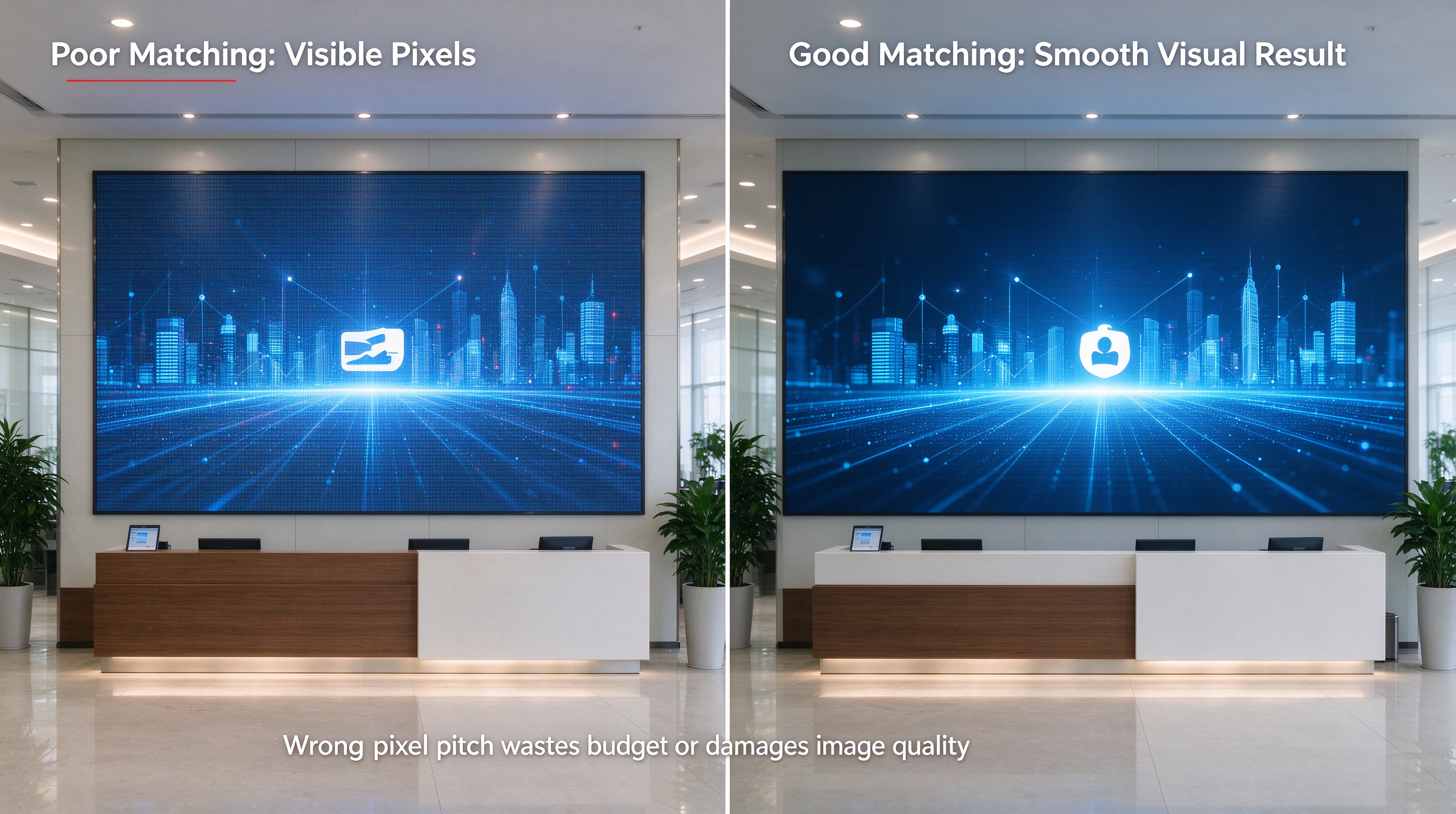
Many new buyers misunderstand pixel pitch: a smaller pitch does not automatically mean “better”. It means you can get a sharp image at a shorter viewing distance.
For P2.6 outdoor rental, the optimal viewing distance starts at around 2.6 m, and the best visual range is from 3 m to 25 m.
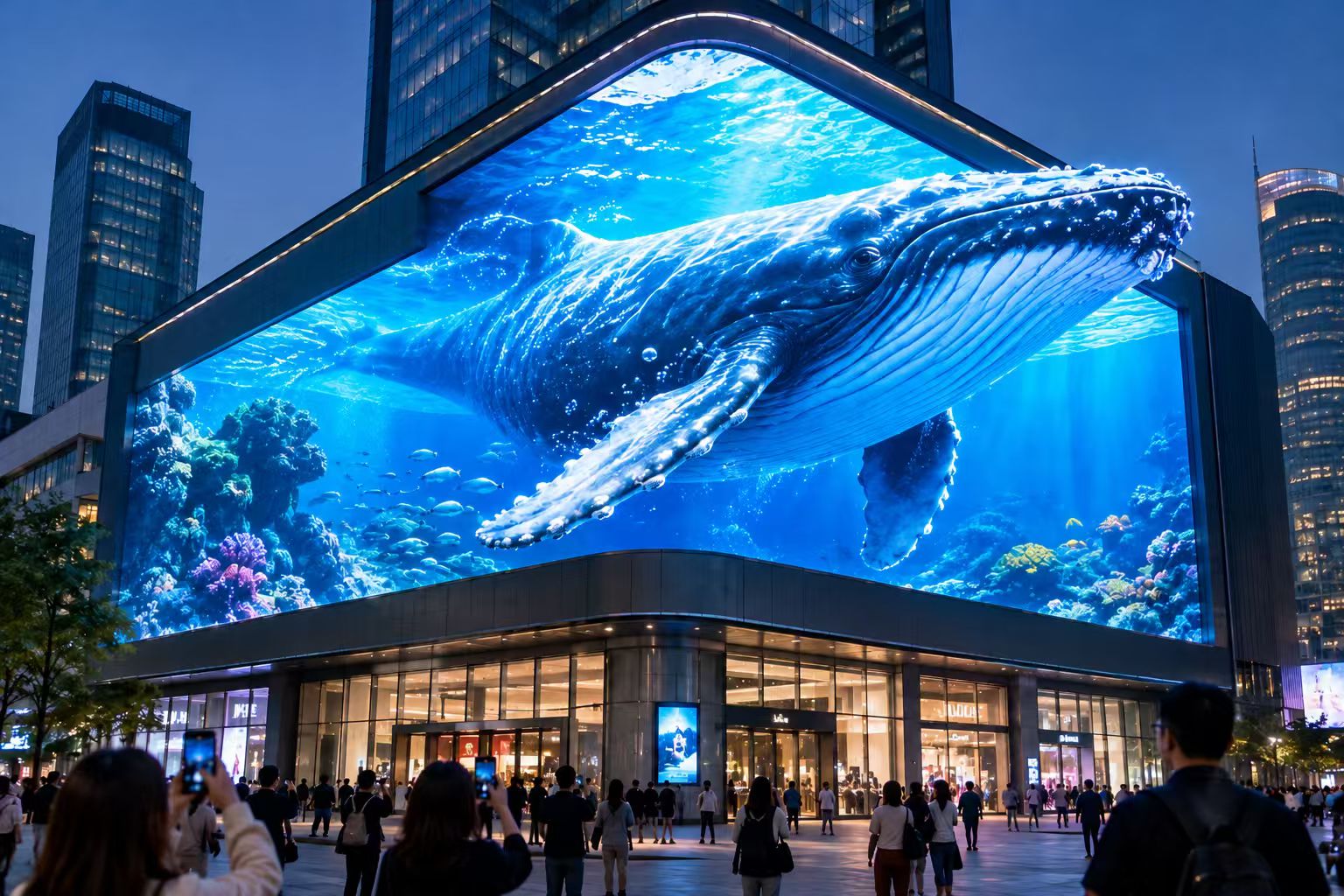
It is ideal for medium‑to‑large‑size backdrops, stage backgrounds, festival walls and outdoor advertising at temporary events.
If your audience regularly stands closer than 2 m, you may need P2.5 or even finer pitch; if viewers are mostly further than 20‑25 m, P3.91 could save you a lot of cost.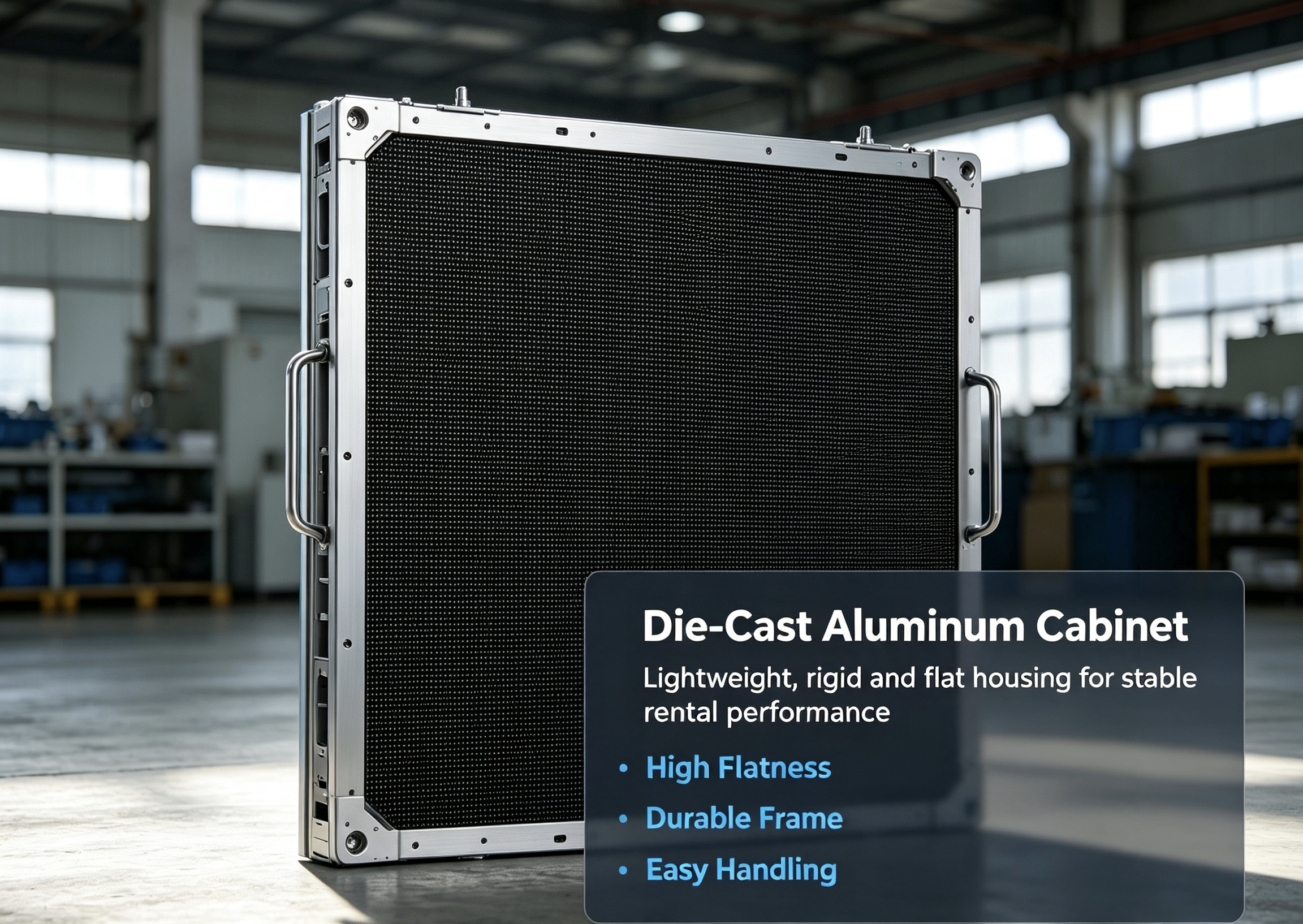
Critical performance parameters you must verify
Do not rely only on the phrase “outdoor grade”. Ask your supplier to confirm these figures in writing.
Brightness
A true outdoor‑ready P2.6 rental screen should deliver 5 000 – 6 000 nits typical brightness.
Some factories list “6000 nits MAX brightness”, while the typical brightness is only 4 200‑4 500 nits.
Max brightness is a short‑term peak value; typical brightness is what you will actually get under sunlight.
Too low brightness means washed‑out, grey‑looking images in direct sun. Too high unnecessary brightness consumes more power and accelerates LED ageing.
Good rental panels support automatic brightness adjustment by light sensor.
Refresh rate
For rental events, especially when cameras and live streaming are involved, 3 840 Hz high refresh is highly recommended.
You will also see 1 920 Hz refresh rate on cheaper options. 1 920 Hz can look fine to naked eyes but often creates visible scan lines when filmed by video cameras or smartphones.
Note: “≥3840Hz” does not always mean constant 3840Hz under all greyscale levels. Ask whether it is real‑3840Hz at 16‑bit grayscale.
Grayscale & bit depth
16‑bit grayscale (65 536 levels) is the standard for high‑end rental LED.
14‑bit can work for simple graphic content, but it loses detail in dark scenes and smooth colour gradients.
16‑bit delivers deeper blacks and smoother transitions for video, concerts and corporate events.
IP Rating
Most buyers ask: “Is it IP65?”
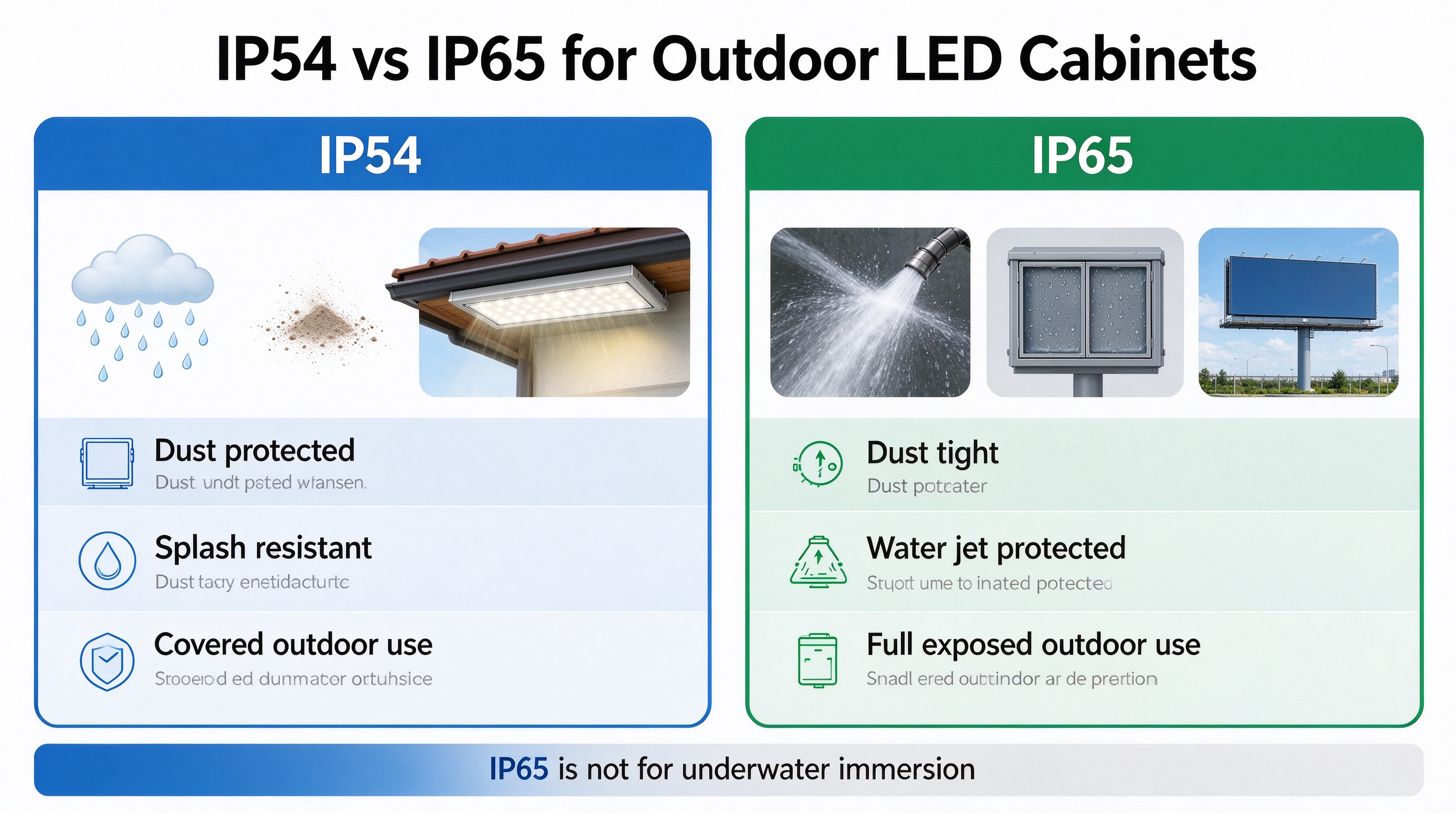
But you need to be precise: Is front side IP65 and rear side IP54 / IP65?
Many so‑called “outdoor” panels have IP65 front only, while the back is IP54 or even IP43.
That means rain splashing from the back can get inside the cabinet if it is not properly covered.
For temporary outdoor use without permanent canopy, we suggest both front & rear at least IP54+, ideally IP65 front / IP54 rear.
Also ask for the third‑party IP test report, not just a verbal claim of “we are IP65”.
Working temperature range
Good‑quality rental cabinets support ‑20 °C ~ +50 °C.
Lower‑cost versions may only guarantee 0 ~ +45 °C.
If you do events in hot summer or cool winter, this specification matters a lot.
Cabinet mechanical specifications (often ignored by buyers)
Rental LED is not only about display quality — the mechanics determine how fast and safely your team can work.
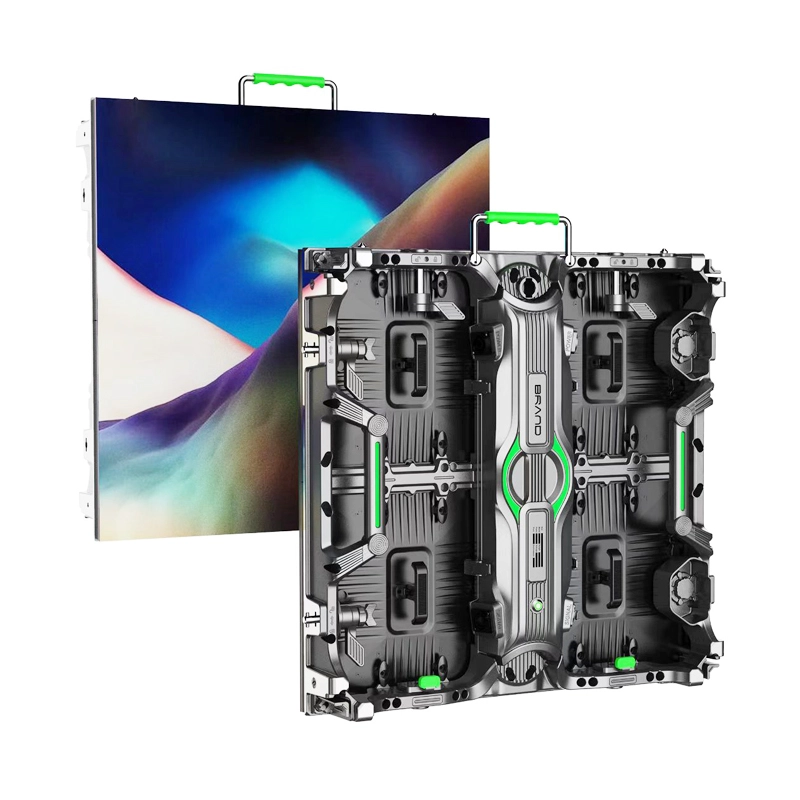
The industry standard cabinet size for P2.6 rental is 500 mm × 500 mm die‑cast‑aluminum.
- Cabinet dimension: 500 × 500 mm
- Cabinet material: ADC12 die‑cast aluminum alloy
- Net weight: 7.5 ~ 8.5 kg per cabinet
If a 500×500 cabinet is heavier than 9 kg, crews get tired faster and transport cost increases.
If it is lighter than 7 kg, sometimes manufacturers reduce aluminum thickness, which may cause warping after repeated splicing.
The quick‑lock system is another key point:
High‑quality cabinets use central fast locks, not cheap side latches.
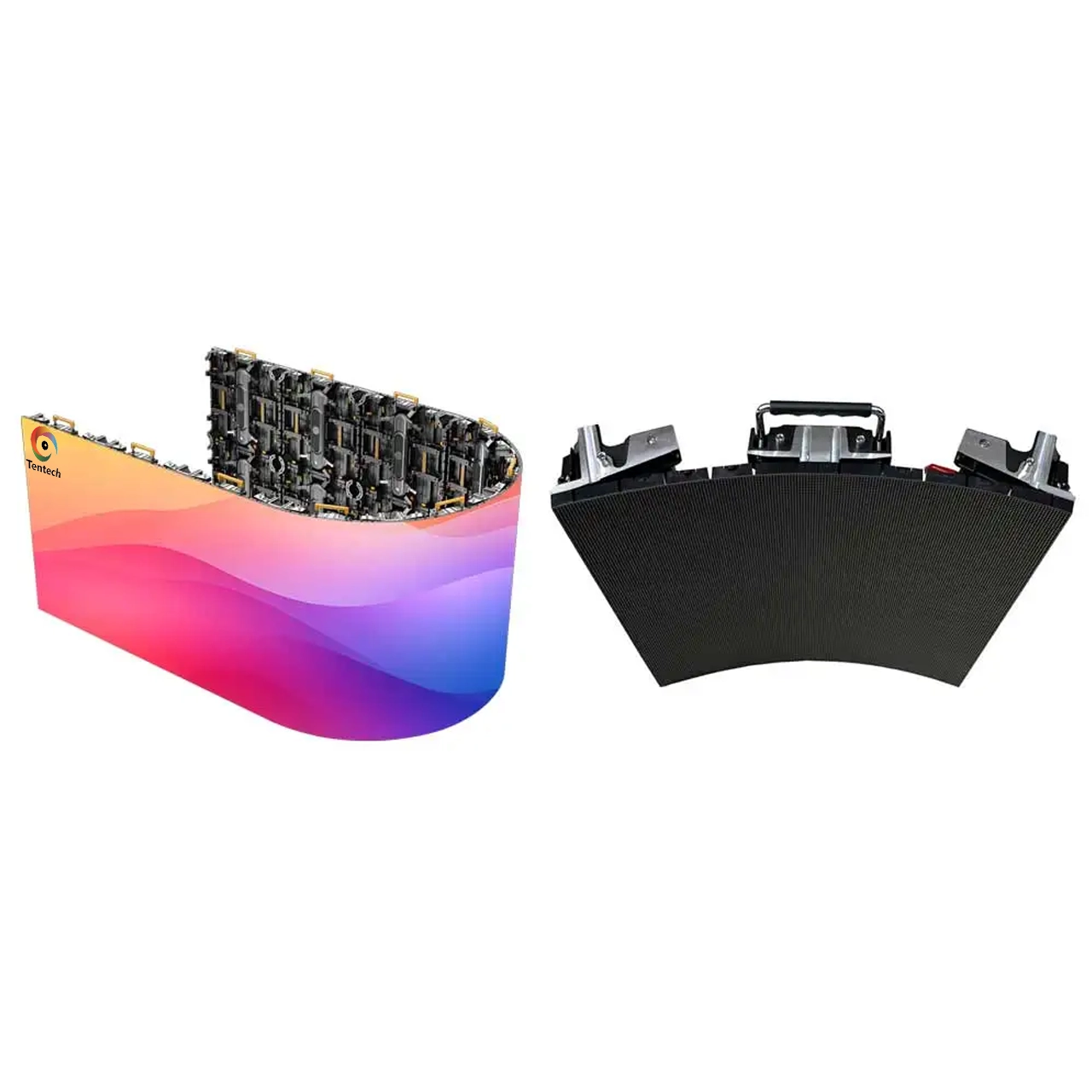
A well‑designed lock allows flat‑splice, right‑angle 90‑degree splicing, and gentle curved‑splicing at around ±7.5 – 10 degrees between cabinets.
Good rental cabinets also have integrated handles, built‑in power‑in / power‑out and signal‑in / signal‑out ports, with no messy external cables hanging out.
Components: What is inside the cabinet?
Spec sheets often write “high‑quality LED lamp, well‑known IC”. These words mean almost nothing.
A professional supplier will freely share component part numbers:
- LED lamp: For outdoor rental, common reliable options include NationStar / Kinglight 2727 SMD lamp
- Driver IC: Common stable ICs are ICN2153, MBI5254 or similar high‑grade constant‑current IC
- Power supply: Mean Well or equivalent certified power supply (not no‑name brand)
Cheap factories may use second‑tier lamp brands or counterfeit‑labelled ICs.
Over time, this leads to dark dots, colour shift and uneven brightness after 6‑12 months of heavy rental use.
Always ask: “What exact model of lamp, IC and power supply are you using on this P2.6 panel?”
Common pitfalls when buying P2.6 rental screens
1. Confusing “max brightness” with “typical brightness”
2. Assuming “outdoor” automatically equals IP65 on both sides
3. Believing “3840Hz” without checking grayscale bit‑depth
4. Buying cabinets too heavy or too light, affecting rental workflow
5. No clear written warranty on modules, power supplies and receiving cards
6. Supplier cannot provide CE‑EMC, RoHS, FCC or required test reports
7. No stock for spare modules, leading to long lead‑time when something fails on‑site
Warranty & after‑sales questions you should ask
Warranty is not just “2‑year warranty”. Dig deeper:
- How many years warranty is offered on LED lamps? Power supplies? Receiving cards?
- Does warranty cover manufacturing defects only, or also normal wear‑and‑tear from repeated rental?
- Who pays shipping costs for replacement parts under warranty?
- How fast can spare modules be dispatched if I have an emergency event?
- Do you keep safety stock of this P2.6 model?
Rental companies live or die by after‑sales support. Even great screens can have issues under heavy use; what matters is how your supplier reacts.
Final words
P2.6 outdoor rental LED display remains one of the most popular mid‑high pitch solutions for temporary outdoor events.
It balances resolution, viewing distance, weight and investment cost very well.
Knowledge of these specifications will help you compare quotations fairly, not only comparing the price tag.
If you are looking for a reliable Chinese manufacturer for P2.6 outdoor rental LED cabinets, Tentech Visual provides 500×500 mm die‑cast aluminum panels with NationStar/Kinglight lamps, real‑3840 Hz refresh at 16‑bit grayscale, 5000‑6000 nits typical brightness and transparent component information.
Contact us today to get a detailed spec sheet and quotation.