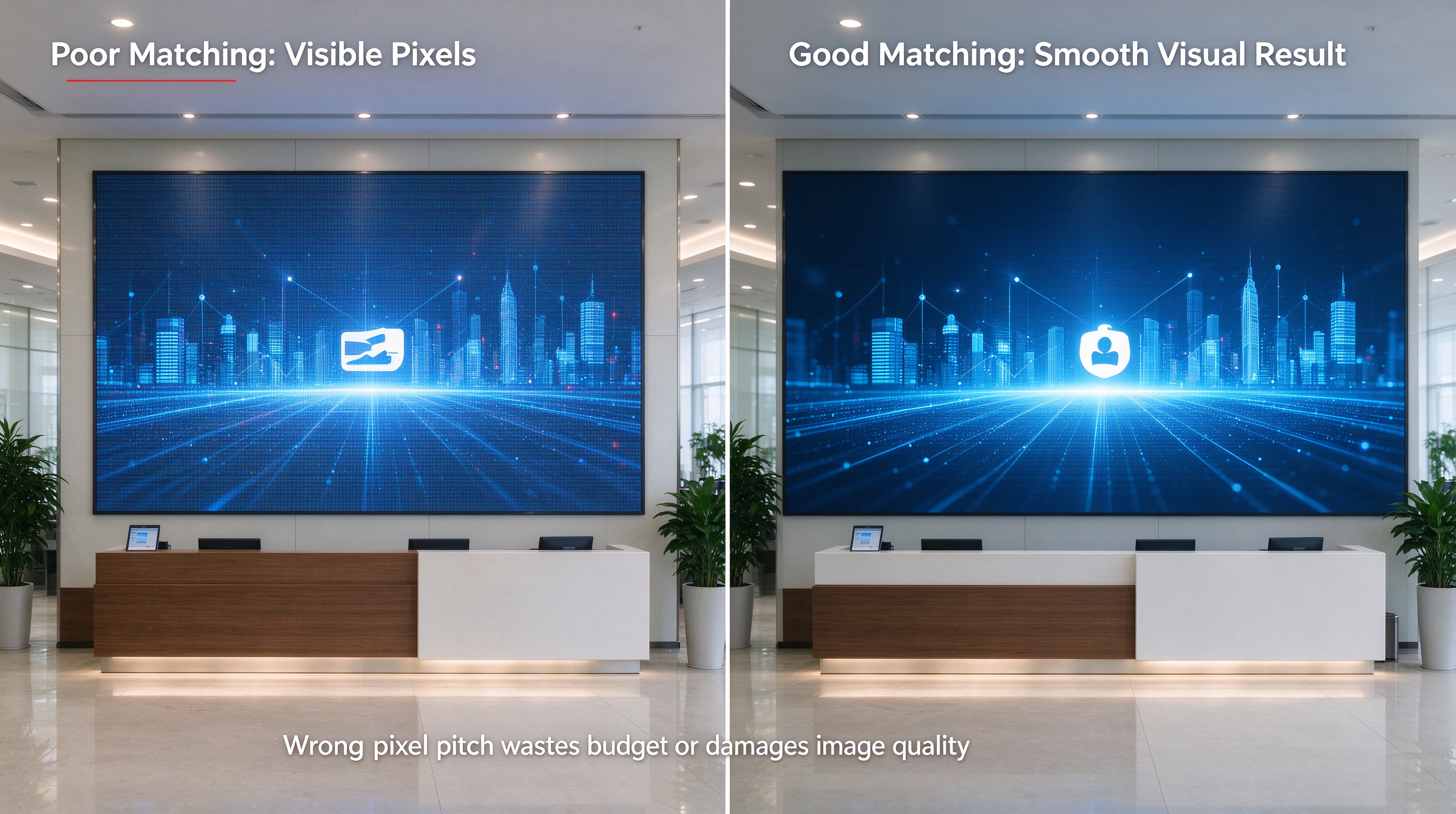

When sourcing outdoor LED screens, many buyers only focus on pixel pitch, brightness and price, while overlooking IP protection rating. Wrong IP grade leads to early module failure, water ingress, short circuits and costly site rework. Some projects waste budget by specifying full IP65 when it is not required; others cut corners with low IP screens for seaside, rainy or dusty locations, causing frequent after-sales headaches.
This guide breaks down IP rating basics for outdoor LED displays, compares IP54 and IP65, and gives clear rules to select the correct rating based on your installation environment.
H2: What Does the IP Rating Mean for LED Screens?
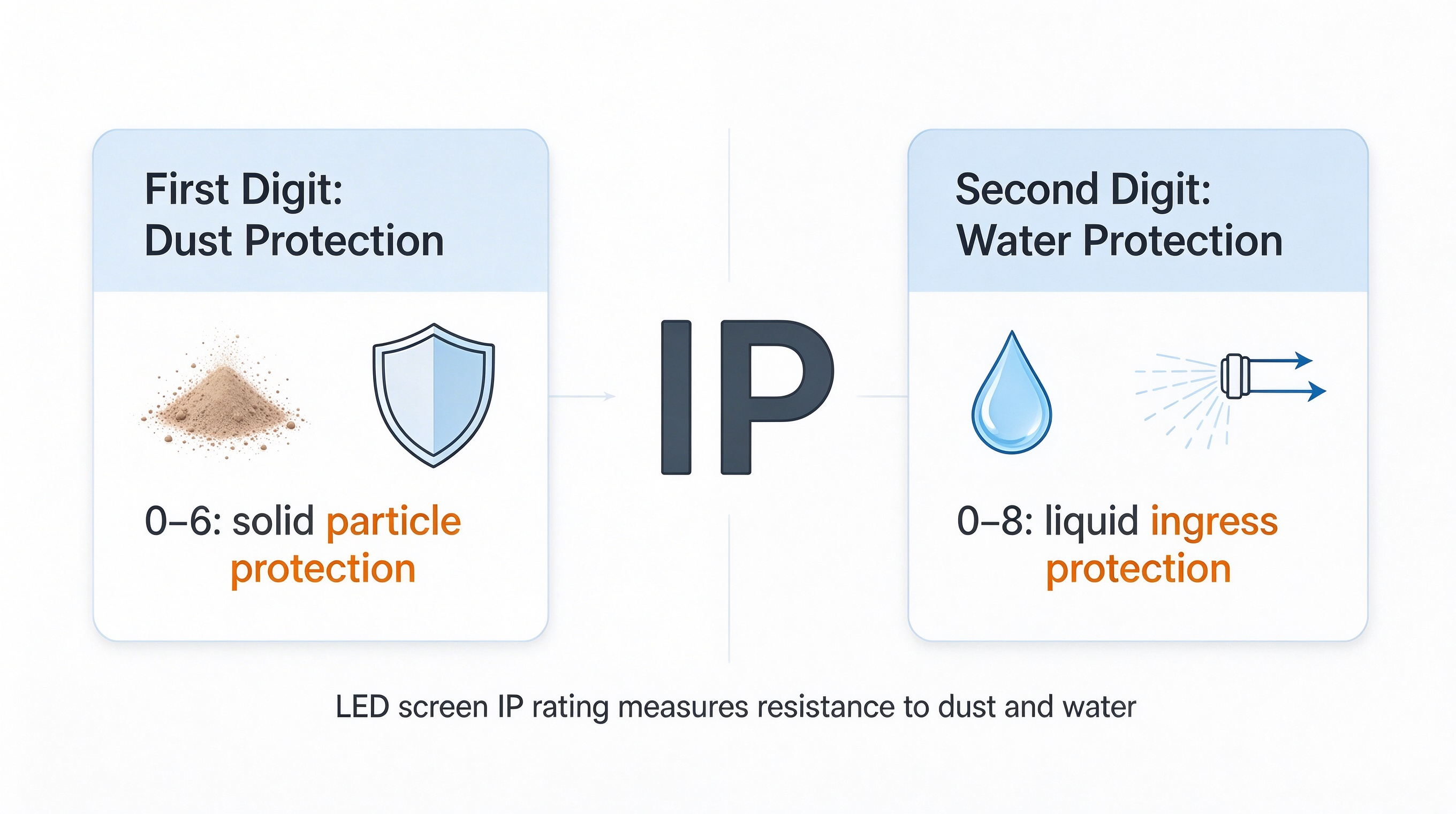
IP (Ingress Protection) rating has two digits.
- First digit: protection against solid particles (dust, sand)
- Second digit: protection against liquid (water splashing, rain, water jet)
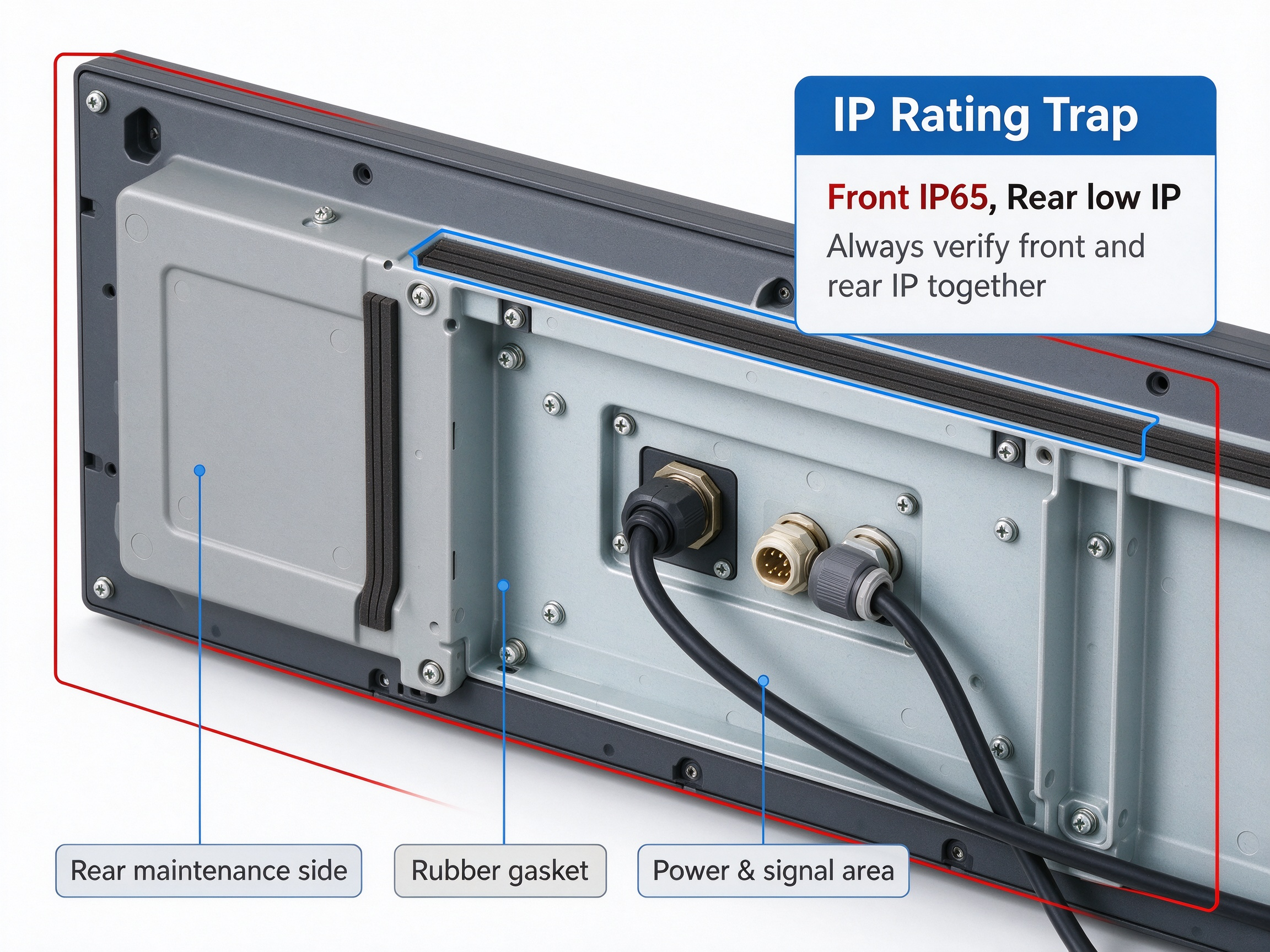
For LED panels, the IP rating is usually marked for the front surface, and sometimes the rear cabinet. Many suppliers only quote front IP, while the back panel or power supply may have a lower rating. This is one of the most common traps in LED procurement.
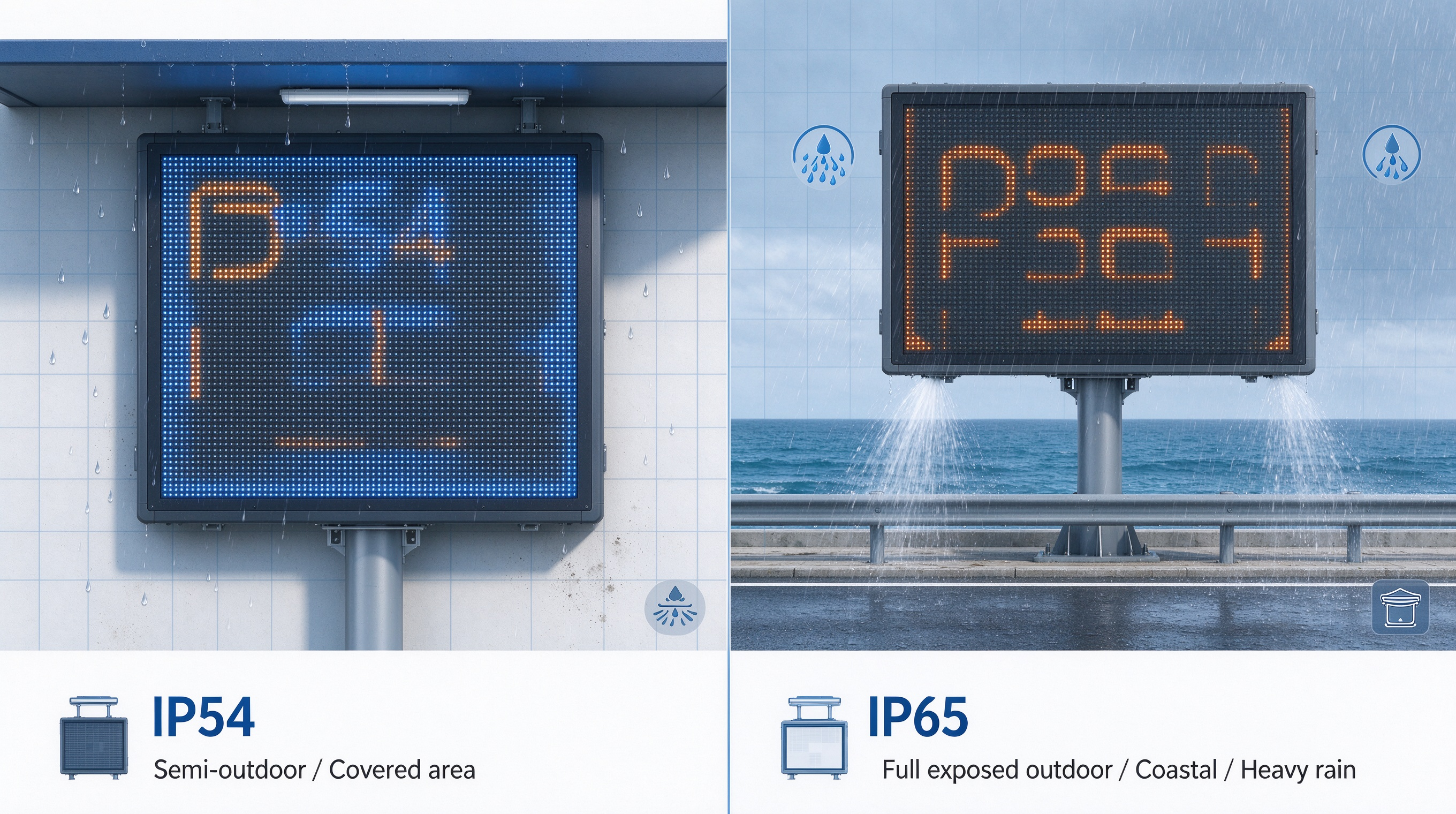
H2: IP54 vs IP65: Core Comparison for Outdoor LED
H3: IP54
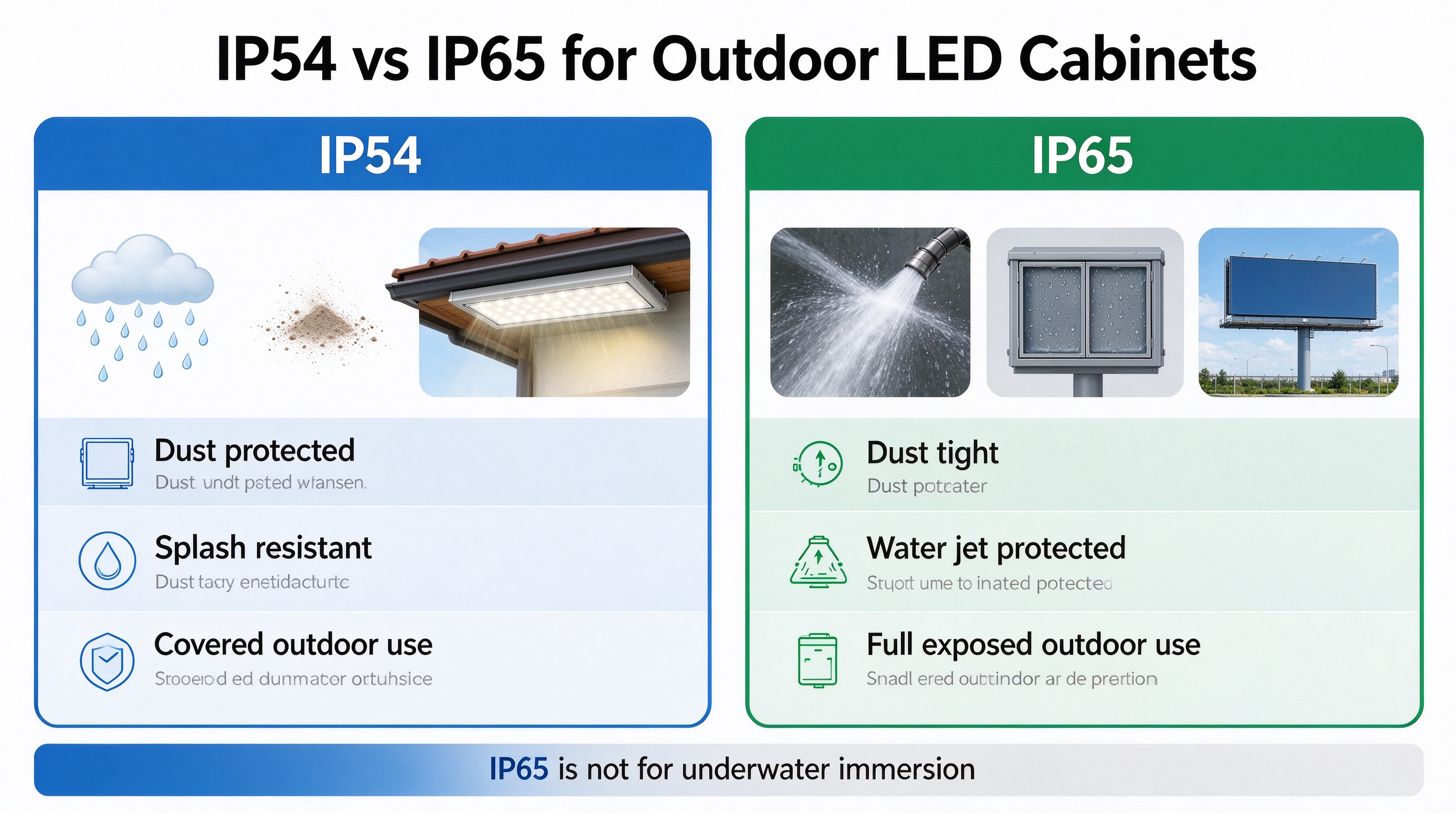
- Dust: dust protected. Limited dust ingress allowed, will not interfere with normal operation
- Water: splash proof. Protect against splashing water from any direction, light rain Best fit: covered outdoor locations, under eaves, shopping mall overhang, semi-outdoor advertising screens. Limitations: cannot resist heavy rain jet, coastal salt spray or direct water wash.
H3: IP65
- Dust: dust tight. No dust can enter the cabinet
- Water: protected against low-pressure water jets from any direction, heavy rainfall Best fit: fully exposed outdoor billboards, roadside screens, stage rental screens, seaside installations, tropical heavy rain regions. Note: IP65 does NOT mean waterproof for underwater immersion. It cannot be submerged.
H2: Environmental Rules to Choose IP Grade
- Fully open outdoor, no roof cover → IP65 recommended
- Covered semi-outdoor, no direct pouring rain → IP54 acceptable, save project cost
- Coastal / salt air area: IP65 + anti-corrosion coating for cabinets and connectors. Salt fog is more destructive than rain alone.
- Desert, heavy sandstorm regions: prioritize higher dust protection, IP65 is strongly advised
- Temporary rental stage screens: most rental panels adopt IP65, because they work in open-air events with sudden rain.
H2: 3 Common IP Rating Mistakes B2B Buyers Make
Mistake 1: Only check front IP rating, ignore rear maintenance side
Some vendors advertise front IP65, but the back of the cabinet is only IP20. Once rain blows from the rear, power supply and receiving card get damaged. Always confirm both front and rear IP in your technical specification.
Mistake 2: Confuse IP65 with IP67
IP67 means temporary immersion. Almost no standard outdoor LED screens use IP67. If a salesperson claims IP67 for normal outdoor LED walls, double verify the test report.
Mistake 3: Rely only on supplier words, skip test certificates
Ask for official IP test report, not just product brochure marking. For large tenders or government projects, third-party lab certification is mandatory.
H2: Extra Tips to Boost Outdoor Screen Reliability Beyond IP
IP rating is only one layer of protection. Even IP65 screens can fail without proper design:
- Cabinet seal quality: aging rubber gasket is the main leak point after 2–3 years
- Cable and connector waterproof treatment
- Drainage hole design inside the cabinet to release condensed water
- Anti-salt spray surface treatment for coastal projects
- Temperature control: ventilation or heater for cold high-humidity zones to reduce condensation
Conclusion
IP selection is a balance between project risk and total budget. You do not need to pay extra for IP65 if your screen sits under permanent shelter. But for fully exposed outdoor and coastal projects, skimping on IP protection will create expensive repair and replacement costs in the long run.
Before sending RFQ, define installation exposure, climate and salt spray condition clearly to your LED supplier. We provide IP test reports and custom cabinet anti-corrosion options for global outdoor LED projects.
CTA Send us your site environment details and screen dimension, our engineering team will recommend the proper IP grade and prepare a detailed quotation for your LED video wall project.